A Korean Folktale Retold in English
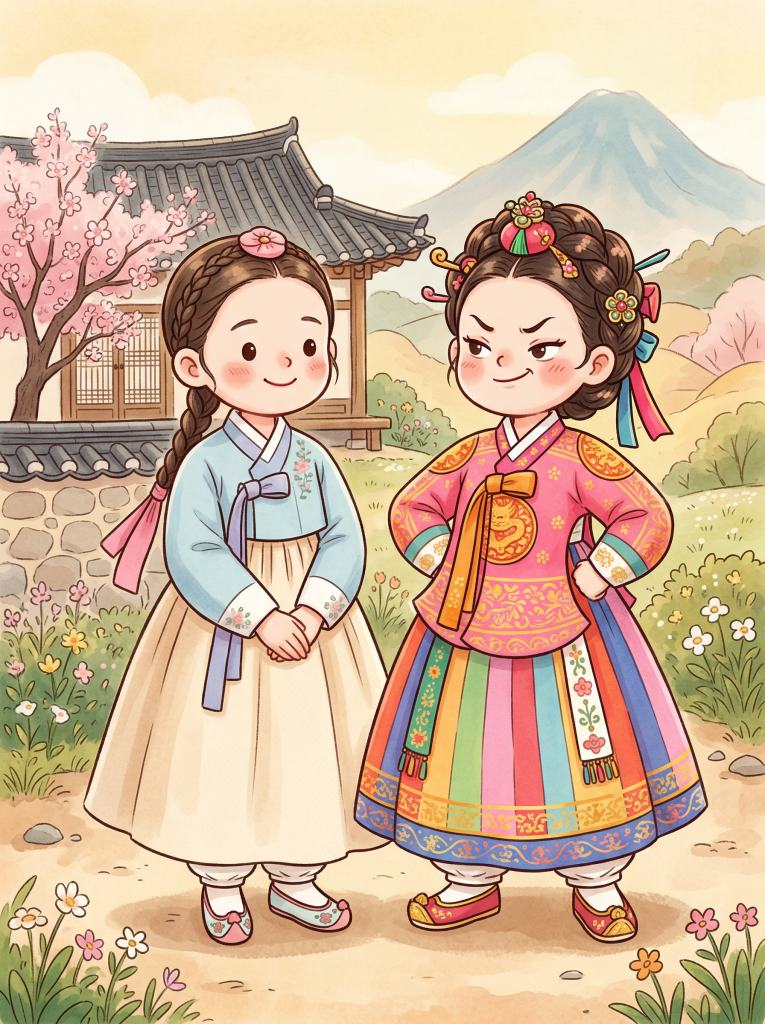
Long ago, in a small village in Korea, there lived a kind and gentle girl named Kongjwi. She lived with her father, who loved her dearly. Kongjwi’s mother had passed away when she was very young, so her father did his best to raise her with love and care. Although their home was not rich, Kongjwi grew up with a warm heart, good manners, and a hardworking spirit.
After some years, Kongjwi’s father remarried. He hoped that his new wife would care for his daughter and bring happiness to their family. But things did not happen that way. His new wife was selfish, cruel, and jealous of Kongjwi’s beauty and goodness. She also had a daughter of her own named Patjwi.
Patjwi was lazy, rude, and spoiled. She had been raised to think only of herself. Unlike Kongjwi, who always spoke politely and helped others, Patjwi complained about everything and never wanted to do any work. Still, Kongjwi tried to be kind to both her stepmother and stepsister.
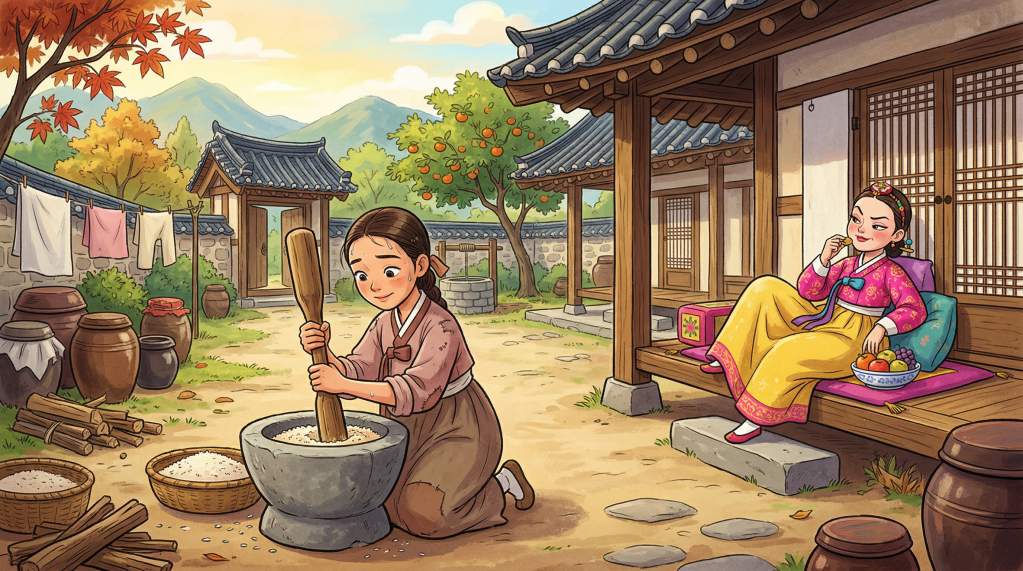
One day, Kongjwi’s father became ill and soon passed away. After his death, Kongjwi was left alone with her stepmother and Patjwi. From that day on, her life became full of hardship. Her stepmother forced her to wake before sunrise and work until late at night. She had to sweep the yard, fetch water from the well, wash clothes in the cold stream, cook meals, and clean every corner of the house. Meanwhile, Patjwi slept late, wore pretty clothes, and spent her days eating, gossiping, and doing nothing.
No matter how tired she was, Kongjwi never spoke with anger. She quietly did all the work given to her. The villagers often saw how gentle and diligent she was, and many felt sorry for her. But her stepmother only grew more jealous because everyone praised Kongjwi.
One spring day, an important announcement spread through the village. The local governor was holding a grand feast, and all the young women of the village were invited. It was to be a joyful celebration with music, dancing, delicious food, and fine clothes. Kongjwi’s heart leaped with excitement. For the first time in a long while, she dreamed of going somewhere bright and beautiful.
She gathered her courage and asked her stepmother, “Mother, may I go to the feast too?”
Her stepmother looked at her with cold eyes and smiled in a cruel way. “Of course,” she said, pretending to be kind. “But first, you must finish a few small tasks.”
Kongjwi felt hopeful and nodded eagerly.
Her stepmother then pointed to a huge pile of rice mixed with tiny beans. “Separate every grain of rice from every bean,” she said. “And do not stop until it is finished.”
Then she showed Kongjwi a broken water jar. “After that, fill this jar with water.”
Kongjwi looked at the cracked jar and the mountain of rice and beans. She knew at once that these tasks were impossible to finish before the feast began. Still, she sat down and began her work. Tears fell from her eyes as she picked through the grains one by one.
Just then, something wonderful happened.
From the sky came a flock of sparrows. They fluttered down around Kongjwi and began pecking quickly and neatly. In no time at all, they separated all the rice from the beans. Kongjwi stared in amazement and thanked them with all her heart.
Next, she carried the broken jar to the well. But every time she filled it, the water leaked out through the crack. She began to cry again, thinking she would never make it in time.
Suddenly, a large toad appeared beside her. Without a word, it pressed its body against the crack in the jar. Kongjwi carefully filled the jar again, and this time the water stayed inside. She hurried home and completed the task.
When her stepmother saw that everything had been done, she was furious. She had hoped Kongjwi would fail. But she could not find a reason to stop her. “Go, then,” she said sharply. “But do not expect anything from me.”
Kongjwi looked down at her old, patched clothes and worn-out shoes. She had nothing nice to wear. Her heart sank.
At that moment, a noble and mysterious lady appeared before her. Some say she was a fairy from heaven, and others say she was a spirit sent to help the innocent. The lady smiled warmly and gave Kongjwi a beautiful silk dress, shining shoes, and elegant ornaments for her hair.
“You have suffered with patience and kindness,” the lady said. “Go to the feast and hold your head high.”
Kongjwi bowed deeply and thanked her. Dressed in the beautiful clothes, she looked like a flower in full bloom. For the first time in many years, she felt happiness shining inside her.
On the way to the feast, Kongjwi walked carefully along the road. But as she crossed a small stream, one of her shoes slipped off and fell behind her. She wanted to stop and look for it, but she was already late and feared missing the feast, so she continued on with only one shoe.
A little later, the governor passed by in his carriage. He noticed the delicate shoe lying on the road. It was clearly made for someone special. He picked it up and wondered, “Whose shoe could this be?”
At the feast, the governor saw many young women, richly dressed and smiling brightly. But none of them seemed to match the beauty he imagined from the lost shoe. Then he saw Kongjwi. Even though she wore only one shoe, her grace and modesty stood out more than anyone else’s beauty. He was immediately drawn to her kindness and quiet dignity.
When the feast was over, the governor ordered his servants to find the owner of the shoe. They went from house to house, asking every young woman to try it on. Patjwi was excited and forced her foot into the shoe, but it was far too small. Her mother insisted it must belong to Patjwi, but everyone could see it did not fit.
At last, Kongjwi came forward. Gently, she slipped her foot into the shoe, and it fit perfectly.
The governor smiled with joy. He had found the one he was looking for. In time, he married Kongjwi, and she moved into his fine house. At last, her days of suffering seemed to be over. She lived in comfort and was treated with the respect she had always deserved.
But her stepmother and Patjwi were still filled with envy.
One day, they invited Kongjwi to visit them. Kongjwi, whose heart remained kind despite everything, agreed to go. While she was there, Patjwi tricked her and caused her to fall into a pond, where Kongjwi disappeared. Patjwi then dressed herself in fine clothes and went back to the governor’s house, pretending to be Kongjwi.
At first, the governor was confused. Patjwi looked different and behaved strangely. She was rude, greedy, and harsh to the servants. He began to suspect that something was terribly wrong.
Meanwhile, from the place where Kongjwi had vanished, a lotus flower bloomed beautifully. Its petals were pure and radiant. Someone brought the flower to the governor, and he was captivated by its beauty. When the flower opened, Kongjwi appeared once again, as gentle and lovely as before.
She told the governor the truth about what had happened. The governor was outraged by the wickedness of the stepmother and Patjwi. They were punished for their cruelty, while Kongjwi finally returned to her rightful place.
From then on, Kongjwi lived in peace and happiness. Yet she never became proud or cruel. Because she had known sorrow, she treated others with compassion. She helped the poor, comforted the weak, and remained humble all her life.
And so the people remembered her story for generations. They told their children that goodness may suffer for a while, but in the end, kindness, patience, and honesty shine brighter than jealousy and greed.

That is why the tale of Kongjwi and Patjwi has been passed down through the years — as a story of hope, justice, and the triumph of a good heart.
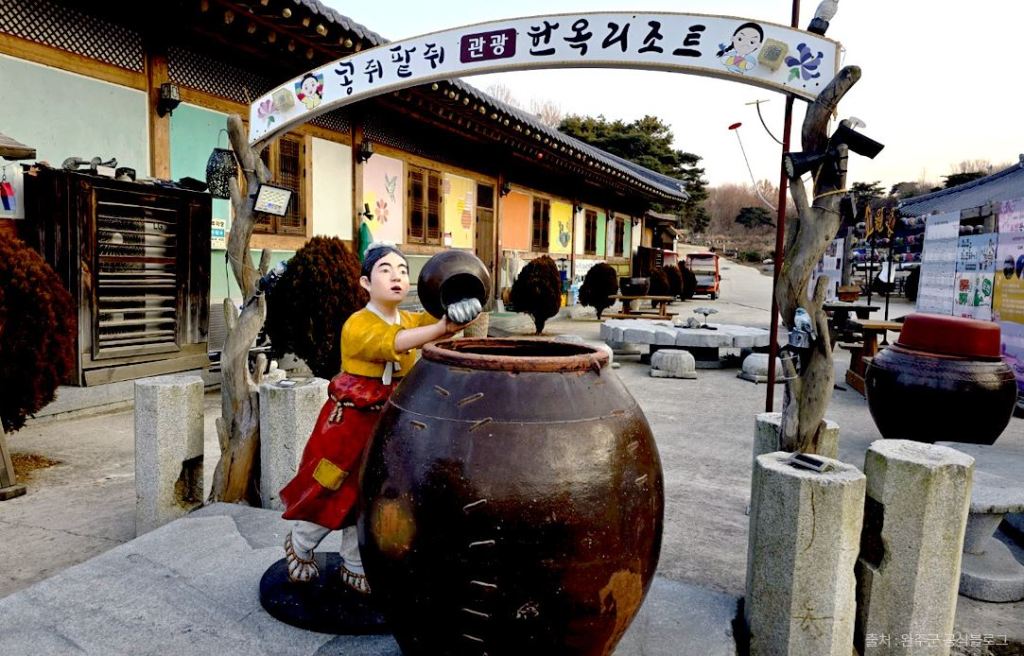
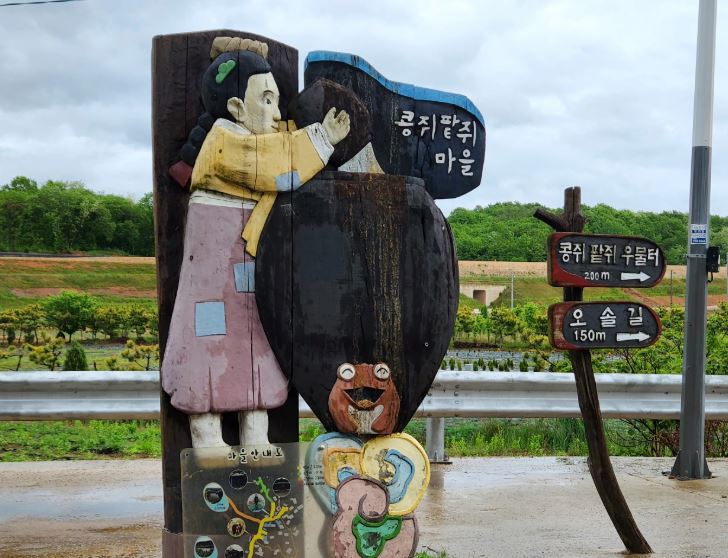
The hometown of the Korean folktale Kongjwi and Patjwi is widely known as Angok Village in Wanju, Jeollabuk-do, near Jeonju South korea
 KOREAN FOLKTALES
Leave a comment