Heungbu and Nolbu is one of Korea’s most famous traditional stories. It tells the tale of two very different brothers and teaches children that kindness is rewarded, while greed brings trouble.
Long ago in Korea, there were two brothers named Heungbu and Nolbu. Nolbu, the older brother, was rich but selfish. Heungbu, the younger brother, was poor but kind-hearted. Although they were brothers, they lived very different lives.
After their parents died, Nolbu kept all of the family’s wealth for himself. He gave nothing to Heungbu and even drove him away. Heungbu, his wife, and their many children were left with almost nothing. Their small house was old, and they often did not have enough food to eat. Still, Heungbu never lost his gentle heart.
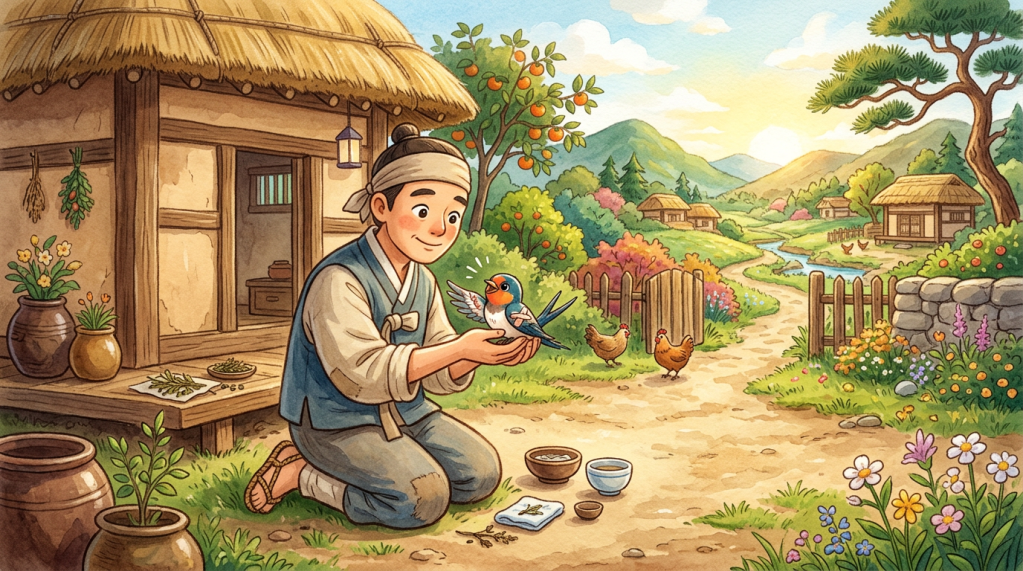
One day, while Heungbu was outside, he found a swallow with a broken leg. Feeling sorry for the little bird, he carefully picked it up and fixed its leg. He protected it until it grew strong enough to fly away again.
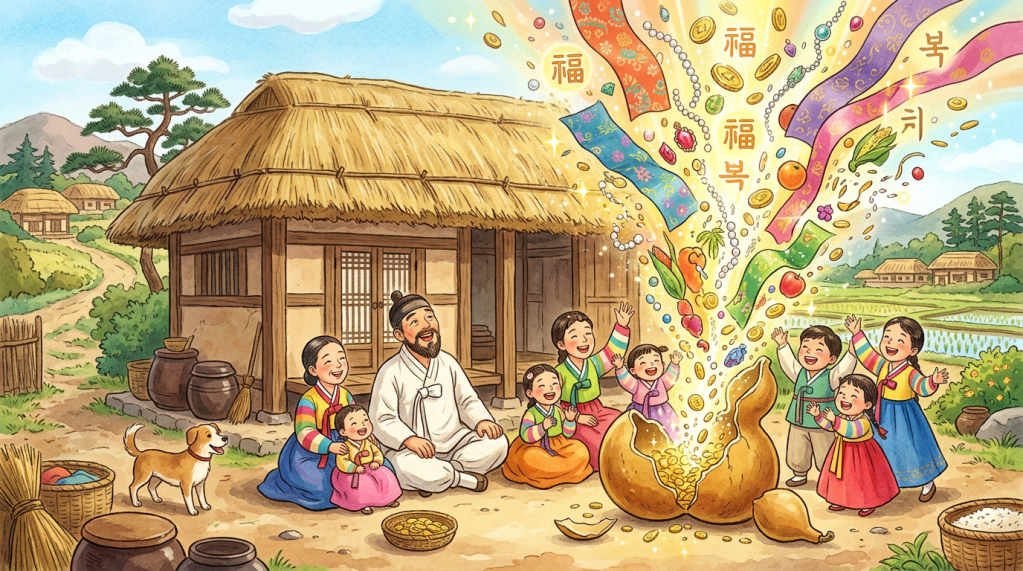
When spring returned, the swallow came back to visit Heungbu. This time, it brought him a special seed. Heungbu planted the seed in the ground, and soon a large gourd vine began to grow. When the gourds became ripe, Heungbu and his family opened them.
To their surprise, the gourds were filled with wonderful treasures. Gold, rice, silk, and many useful things poured out. Some versions of the story even tell of helpful people and magical gifts coming from the gourds. Thanks to the swallow’s gift, Heungbu and his family no longer lived in poverty.
When Nolbu heard what had happened, he became jealous. He did not think about kindness or gratitude. Instead, he only wanted the same reward for himself. So he found a swallow and deliberately hurt its leg. Then he pretended to heal it, hoping to receive another magical seed.
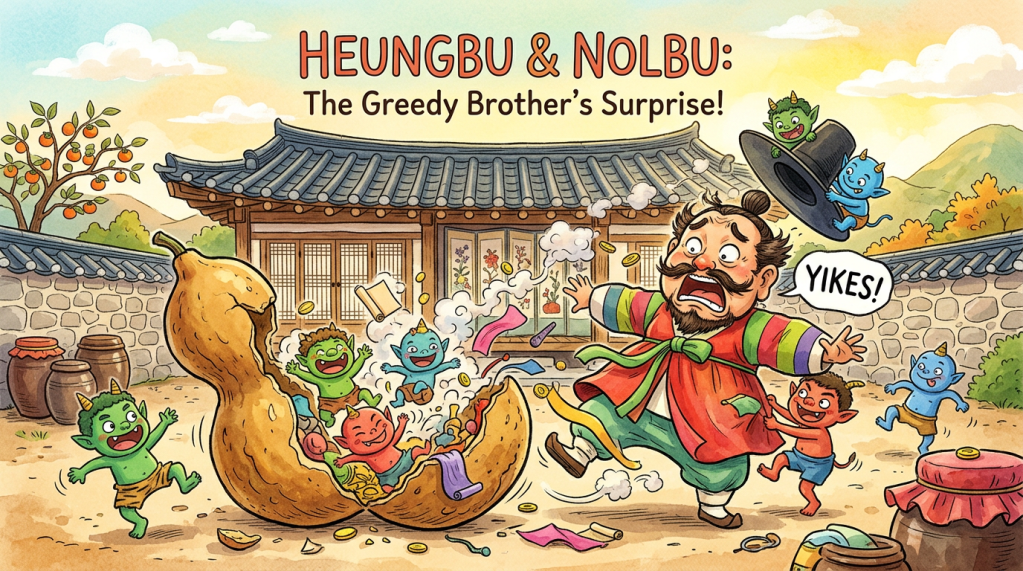
The next year, the swallow returned and gave Nolbu a seed as well. He quickly planted it and waited greedily for treasure. But when the gourds opened, they did not bring gold or blessings. Instead, all kinds of trouble burst out. Goblins, monsters, and disasters came pouring from the gourds, frightening Nolbu and ruining his house.
At last, Nolbu realized how selfish and foolish he had been. He had wanted blessings without kindness and reward without love. Ashamed of his greed, he turned to Heungbu.
Unlike Nolbu, Heungbu did not answer cruelty with cruelty. He welcomed his brother and forgave him. In the end, the brothers were reconciled, and peace returned to the family.
Heungbu and Nolbu remains one of Korea’s most beloved folktales because it teaches a simple but powerful lesson: kindness brings blessings, while greed leads to trouble. At the same time, it also reminds us that forgiveness can heal even broken relationships. Based on the traditional Korean classic Heungbujeon, a story known for its themes of brotherhood, moral justice, and humorous social satire.
–The story of Heungbu and Nolbu has long been cherished as a beloved Korean folktale closely associated with Namwon in Jeollabuk-do. Even today, Namwon feels like a place where the warmth and gentle spirit of Heungbujeon still quietly linger.

When you picture the scenery of Namwon, it almost feels as if the kindness of Heungbu—who never lost his gentle heart even in poverty—still lives within the landscape. The annual Heungbu Festival brings this old tale back to life for modern visitors, reminding us of the lasting value of sharing, gratitude, and brotherly love. In that sense, Namwon is more than just a setting of the story; it is a special place that still holds the warmth of Heungbujeon today.
 KOREAN FOLKTALES
Leave a comment