Among the many folktales loved in Korea, Hokburi Yeonggam is one of the most entertaining and memorable. The story is often introduced in English as “The Old Man with a Lump” or “The Old Man with a Wen.” At first, it feels like a light and humorous tale about goblins, singing, and a strange twist of fortune. But underneath its playful tone, it offers a sharp reflection on originality, imitation, and how people often misunderstand the secret behind another person’s success.
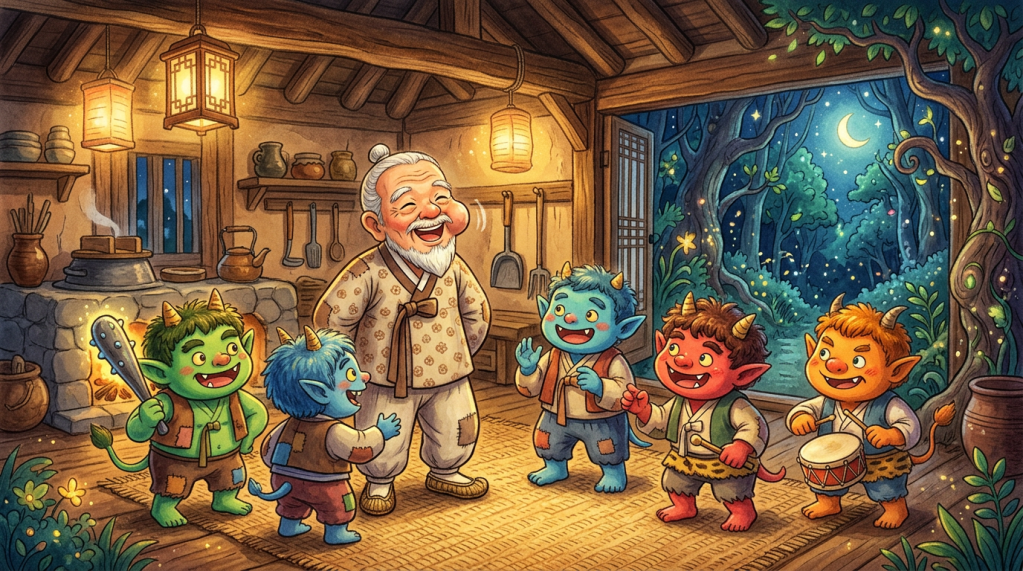
Hokburi Yeonggam is a classic folktale about an old man who loses the lump on his face after singing for goblins, while another man who tries to copy him ends up with an extra one. Funny and clever, the story shows that originality brings luck, but imitation without understanding can lead to trouble.
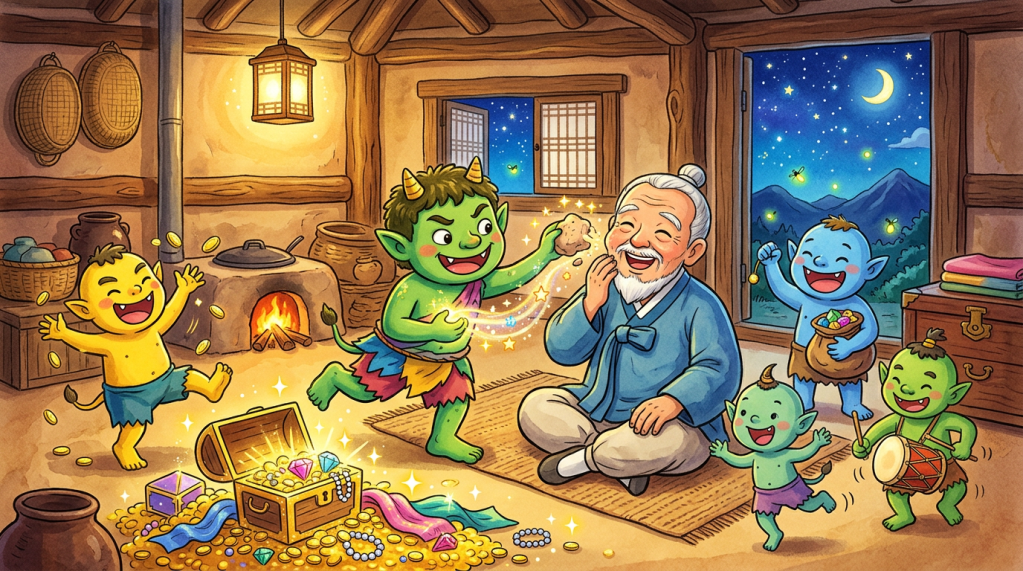
The story begins with an old man who has a large lump on his face. One day, he happens to encounter a group of dokkaebi, the playful and supernatural goblins of Korean folklore. Instead of panicking, he sings for them. The goblins are fascinated by his voice and ask where such wonderful music comes from. Thinking quickly, the old man jokingly says that the sound comes from the lump on his face. Believing him, the goblins remove the lump and even reward him with wealth. In a single strange night, the old man loses the burden he carried and gains unexpected fortune.
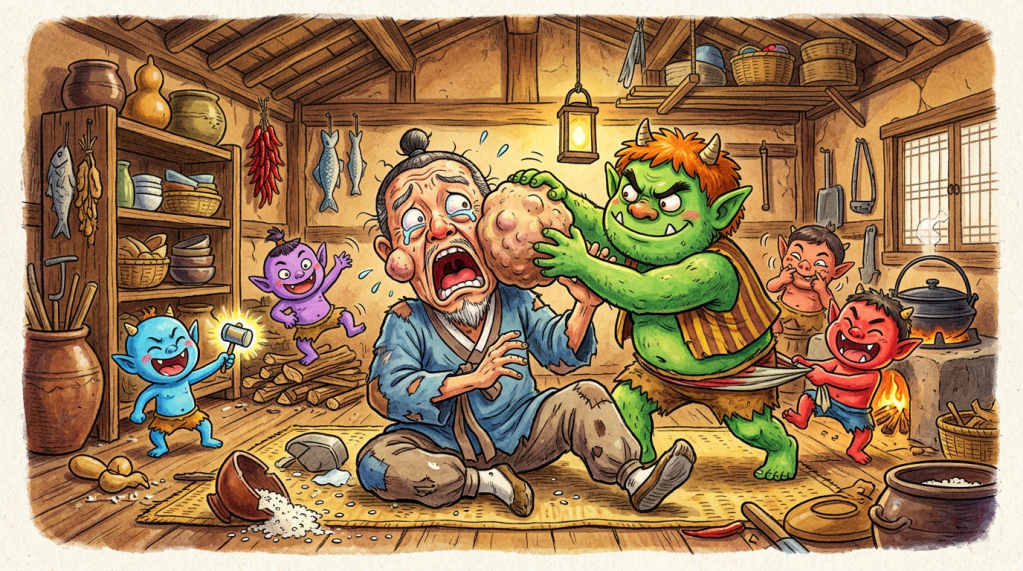
News of this miracle spreads quickly, and another old man with a lump hears the story. Naturally, he wants the same result. So he goes out in search of the goblins and tries to repeat exactly what the first old man did. He sings, waits for their question, and gives the same answer: that the music comes from his lump. But this time, the goblins realize he is lying. Rather than rewarding him, they punish him by attaching another lump to his face. Instead of returning home blessed, he comes back even worse off than before.
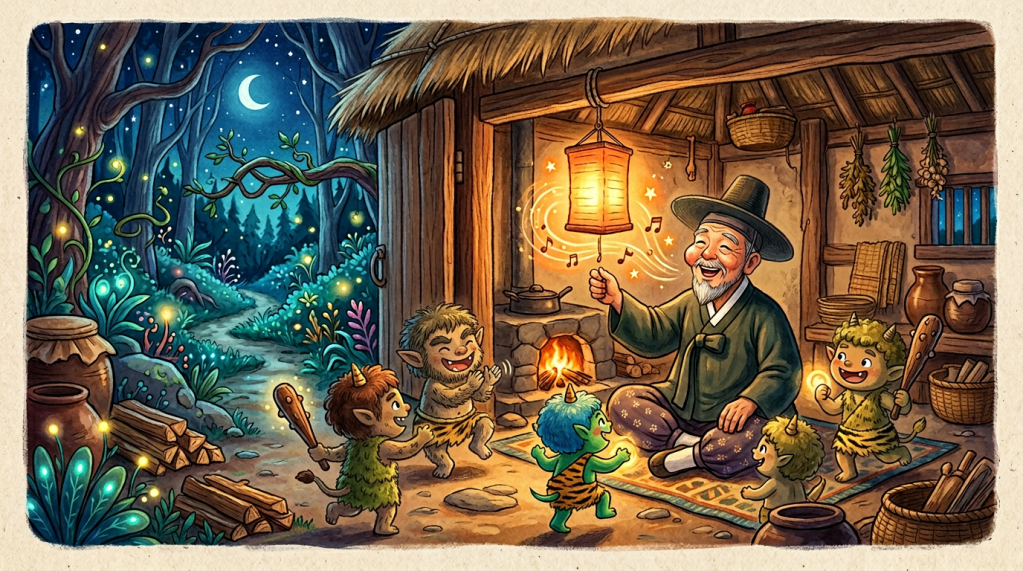
This simple structure is what gives the tale its lasting charm. It is funny and easy to remember, but it also leaves behind a very clear impression. The first old man is not necessarily portrayed as perfectly virtuous in the way some moral folktale heroes are. What matters more is that he acts naturally and responds creatively in the moment. The second man, by contrast, does not understand the spirit of what happened. He only tries to copy the outer action in hopes of receiving the same reward. The result is failure, embarrassment, and punishment.
According to the Korean encyclopedia, this story is important as a classic example of an imitation tale. In this type of narrative, the first person gains fortune, while the imitator suffers misfortune. The story does not strongly focus on “good versus evil” in the usual moral sense. Instead, it emphasizes the difference between creative action and empty imitation. That distinction makes the folktale feel surprisingly modern. Even today, people often try to copy someone else’s path to success without understanding the personality, timing, or originality behind it. In that way, Hokburi Yeonggam still speaks clearly to contemporary readers.
Another reason the story remains so beloved is the presence of the dokkaebi. In Korean folklore, dokkaebi are not always frightening monsters. They are often strange, funny, unpredictable beings who can reward, trick, or test humans. In this story, they appear both foolish and powerful at the same time. Their role adds humor and magical energy, but it also reminds readers that fortune does not always come from logic alone. Sometimes luck arrives through the unexpected, and the way a person responds in that moment can change everything.
The tale also has an interesting scholarly background. The Korean encyclopedia notes that there is debate over whether the story is fully indigenous to Korea or whether it spread through connections with similar stories known elsewhere, including Japan. Still, it has long circulated in Korean story collections and is now widely recognized as part of the folktale tradition familiar to Korean readers. For a blog post, this makes the story even more interesting: it is not only a playful folktale, but also a story that invites readers to think about how stories travel, change, and take root in new cultures.
In the end, Hokburi Yeonggam is more than a funny tale about lumps and goblins. It is a story about human desire, quick wit, and the danger of chasing results without understanding their cause. It reminds us that originality has power, while imitation without insight can lead to the opposite of what we hope for. Short, vivid, and rich with folktale energy, it remains one of the most enjoyable stories to introduce in a blog about Korean traditional tales.
 KOREAN FOLKTALES
Leave a comment