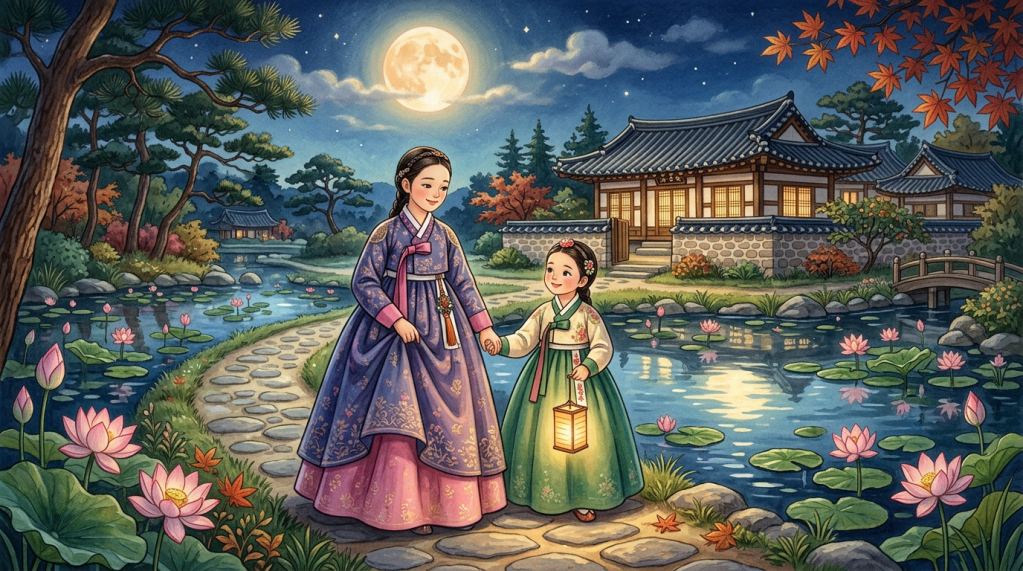
Also known as The Story of Janghwa and Hongryeon.
Among Korea’s many traditional stories, Janghwa Hongryeonjeon stands out as one of the most haunting and emotionally powerful. At first glance, it may sound like a simple old folktale about two sisters and a cruel stepmother. But the story is much deeper than that. It is a tragic family tale filled with grief, false accusation, silent suffering, and, ultimately, the long-awaited triumph of truth.
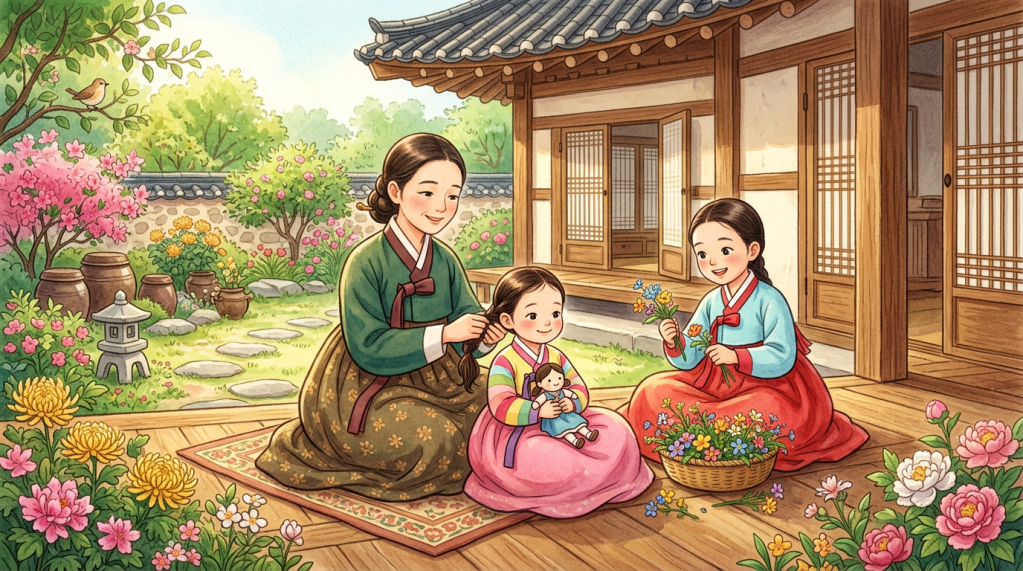
The story centers on two sisters, Janghwa and Hongryeon, who are born into a respected household. Their mother dies when they are still young, and their father later remarries. After the new wife, Lady Heo, gives birth to sons of her own, she begins to treat the sisters with growing cruelty. What begins as emotional distance turns into abuse, jealousy, and eventually a deadly plot. In this sense, the tale reflects not only private family conflict, but also the fragile position of children in a household shaped by hierarchy and power.
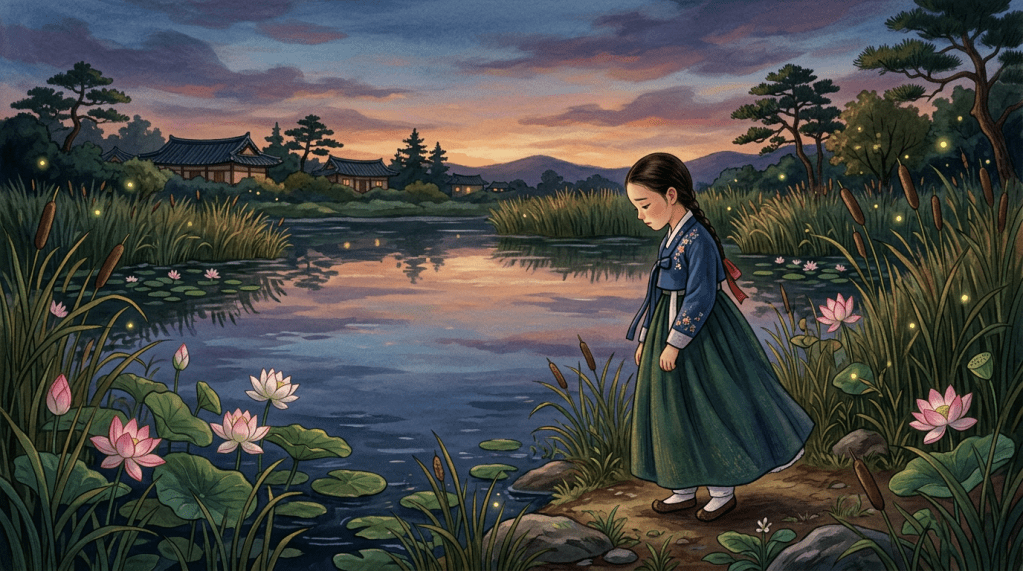
Lady Heo’s hatred toward the sisters becomes most severe toward Janghwa, the older daughter. In one of the most tragic scenes of the story, the stepmother falsely accuses her of immoral behavior by using fabricated evidence. Unable to bear the shame and pressure placed upon her, Janghwa is driven to her death in a pond. When Hongryeon learns what has happened, she is overwhelmed by grief and follows her sister in death. Their deaths transform the story from a domestic tragedy into a ghost tale, and from that moment on, the emotional weight of the narrative deepens even further.
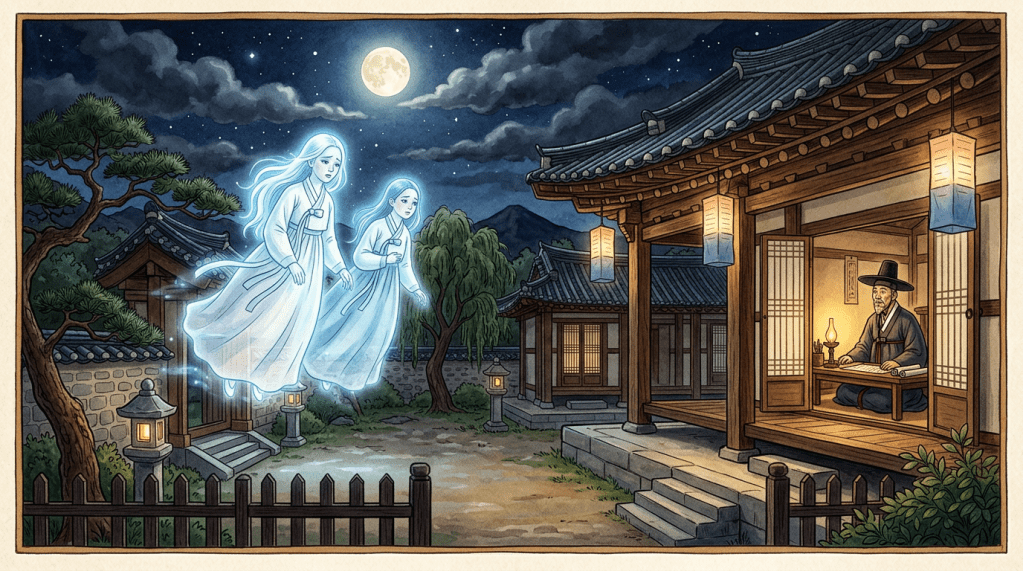
After the sisters die, their spirits appear before newly appointed magistrates, crying out for justice. Many are too frightened to face them, but eventually a courageous official listens carefully to their story and investigates what truly happened. The false evidence is reexamined, the stepmother’s deception is uncovered, and the truth is finally revealed. Justice is carried out, and the sisters’ resentment is at last resolved. This final movement of the story gives readers a powerful sense that even when truth is buried, it cannot remain hidden forever.
What makes Janghwa Hongryeonjeon especially memorable is that it is not merely a ghost story. It is also a story about the collapse of a family. The tale exposes the cruelty that can emerge inside a home, especially when those in power fail to protect the vulnerable. In the Korean encyclopedia, the work is described as a representative example of a “stepmother-family” narrative, while also showing the ethical problems that arise between a stepmother and the children of a previous marriage. It further points out that the tragedy is intensified by the irresponsibility and weakness of the father, whose failure to protect his daughters allows the household to fall apart.
Another reason the story continues to resonate today is its emotional clarity. Janghwa and Hongryeon represent innocence, dignity, and sisterly love, while the stepmother stands for jealousy, greed, and abuse of authority. The contrast is sharp, but that simplicity gives the tale its lasting force. Readers are not only drawn into the sisters’ sorrow; they also feel the relief of truth being restored. The story reminds us that injustice may silence people for a time, but it does not erase what happened.
Modern audiences may also recognize the tale because it inspired later cultural adaptations, including the well-known film title A Tale of Two Sisters. Even so, the original folktale has its own enduring power. It speaks across generations because it touches universal emotions: fear, grief, love, betrayal, and the longing to be heard.
In the end, Janghwa Hongryeonjeon is remembered not simply because it is sad, but because it insists on moral clarity. It tells us that cruelty within a family can be as devastating as any outside danger, and that truth, even when delayed, still matters. For readers exploring Korean traditional stories, this tale offers more than drama or mystery. It offers a moving reflection on justice, memory, and the voices that refuse to disappear.
 KOREAN FOLKTALES
Leave a comment