Also known as Mokdoryeong and the Great Flood.
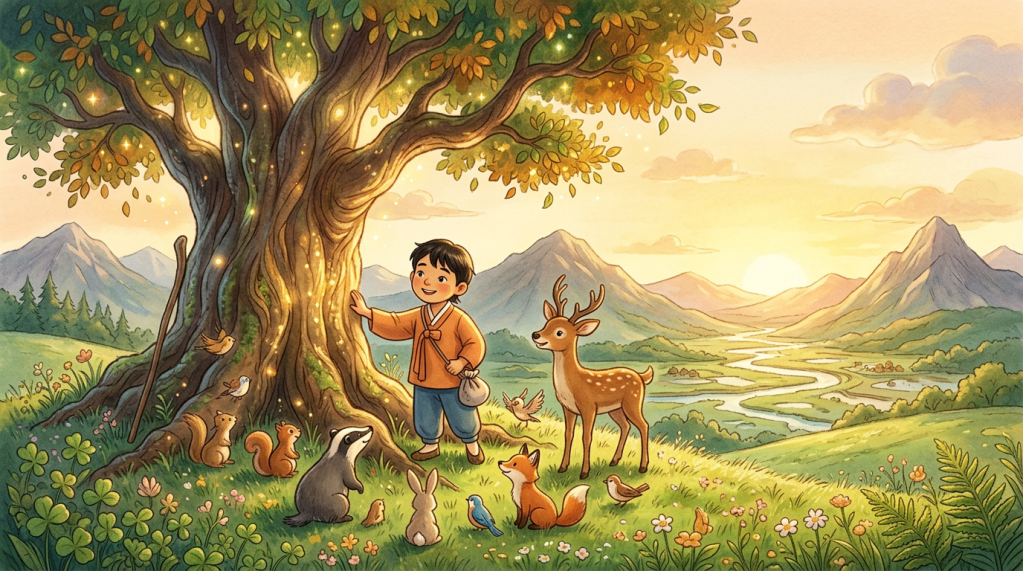
Among Korea’s traditional folktales, Namu Doryeong is one of the most symbolic and memorable. It is not simply a story about survival during a great flood. It is also a tale about kindness, betrayal, gratitude, and the beginning of a new human world. With its mythical atmosphere and emotional moral core, the story feels both ancient and surprisingly timeless.
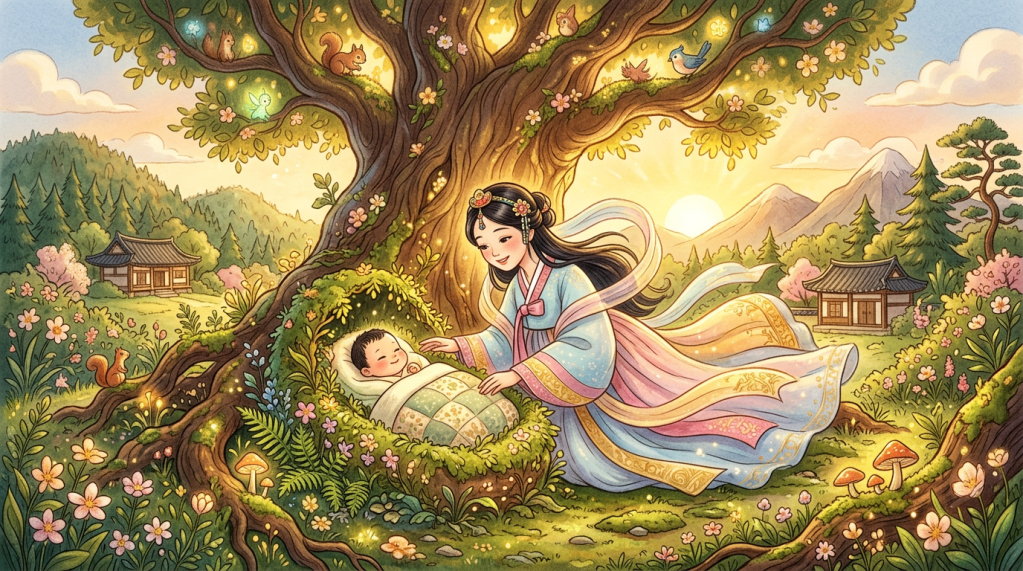
The tale begins with a mysterious birth. According to the story, a heavenly fairy comes down to earth and gives birth to a boy through the spirit of a tree. That child grows up to be known as Namu Doryeong, or “Tree Boy.” From the very beginning, he is connected to both heaven and nature, which gives the story a sacred, dreamlike quality. He is not an ordinary child, but someone born between two worlds, carrying the quiet strength of the natural world within him.
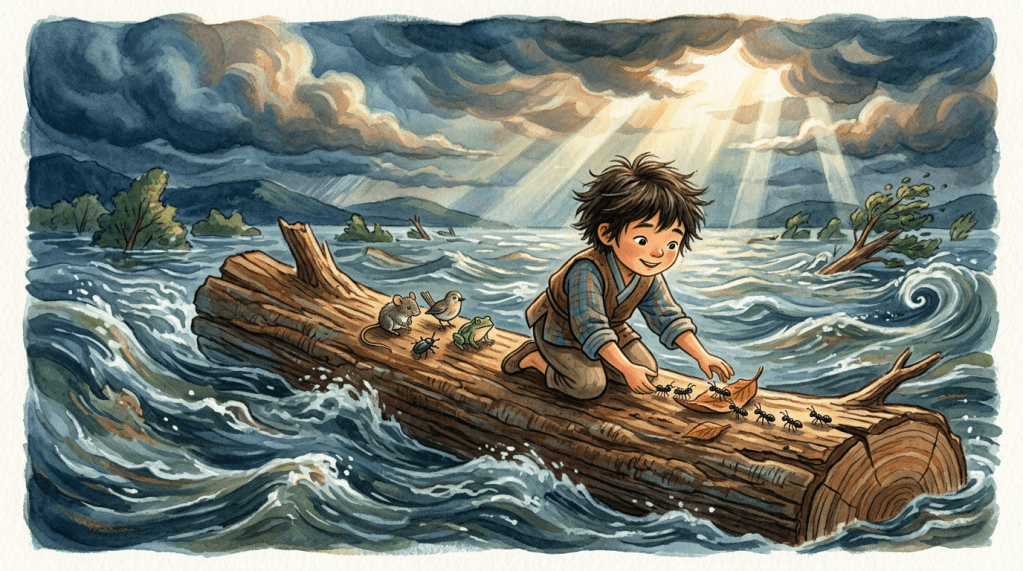
One day, a terrible flood covers the earth. As the waters rise, Namu Doryeong survives by riding on his father, the tree. While drifting through the flood, he encounters small living creatures begging to be saved. He kindly rescues ants and mosquitoes, showing compassion even in the middle of disaster. Later, he also saves a boy, even though the tree warns him against doing so. This moment becomes one of the most important turning points in the story, because it reveals the difference between instinctive kindness and the painful risk that sometimes comes with helping others.
After the flood finally ends, Namu Doryeong and the others reach high ground and come upon a house where an old woman and her daughters live. At first, this seems like the beginning of peace. But the boy whom Namu Doryeong saved does not repay the kindness he received. Instead, he becomes jealous and tries to push Namu Doryeong aside. Wanting advantage for himself, he slanders Namu Doryeong and causes him to face a series of difficult trials. In this part of the story, the folktale turns from a survival myth into a test of character. It asks a simple but powerful question: who truly deserves a new beginning?
What follows is one of the most beautiful ideas in Korean folklore. The animals and creatures Namu Doryeong had saved during the flood return to help him. Each one remembers his kindness. Each one repays the life he protected. Through their help, he is able to overcome the trials placed before him. In the end, Namu Doryeong marries one of the daughters, while the ungrateful boy is given a far humbler fate. Because the flood had swept away the rest of humanity, the surviving couples become the ancestors of a new human world. In this way, the story is not only a folktale, but also an origin story explaining how life begins again after destruction.
One reason this tale remains so meaningful is that it combines myth and moral lesson in a very natural way. The Korean encyclopedia explains that this story belongs to the worldwide tradition of great flood myths, yet it has a distinctively Korean tone. Unlike some flood myths that focus mainly on divine punishment, Namu Doryeong emphasizes the contrast between goodness and selfishness, and between gratitude and betrayal. The story shows that even when the world begins again, human nature still contains both kindness and cruelty.
Another striking feature of the story is its view of animals. In many scenes, the animals behave with more loyalty and gratitude than the human boy who was rescued. This gives the folktale a special emotional depth. It suggests that the natural world is not separate from humanity, but deeply connected to it. It also reflects a traditional Korean sensibility in which nature is alive, responsive, and morally meaningful. The tree is not just wood, the animals are not just background figures, and survival is not simply physical. Everything in the story is part of a living moral universe.
For modern readers, Namu Doryeong can still feel deeply relevant. It speaks to environmental awareness, to the value of compassion, and to the idea that small good deeds are never truly lost. A child who saves even the smallest creatures may one day be saved in return. A person who acts with sincerity may be tested, but not forgotten. In that sense, this old story offers a hopeful message for any age: kindness may seem small in the moment, but it can become the very force that carries the world forward.
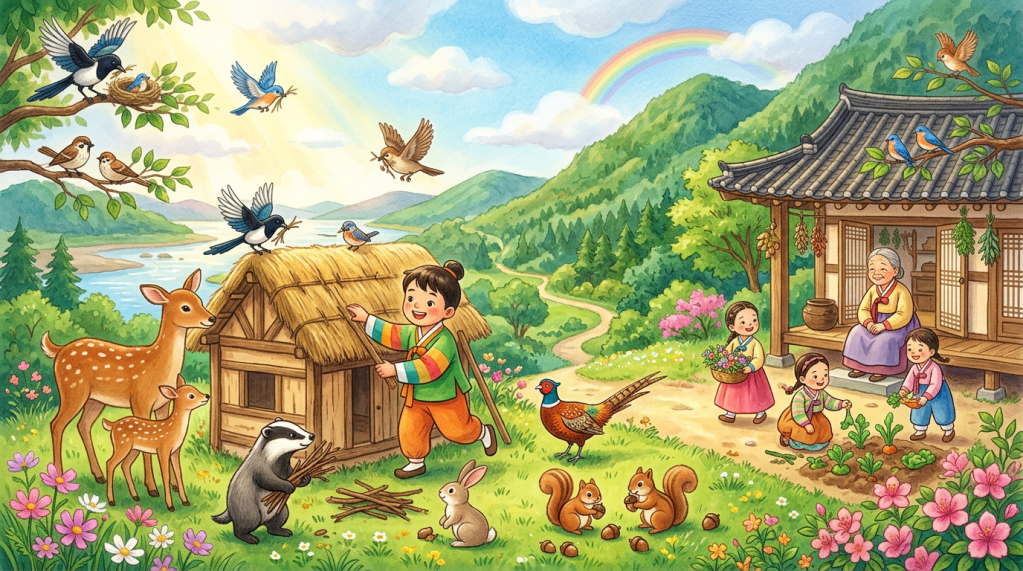
In the end, Namu Doryeong is a story of survival, but it is also a story of rebirth. It imagines a world washed clean by floodwaters and rebuilt through character, memory, and mutual care. Gentle, mythical, and deeply symbolic, it remains one of Korea’s most meaningful traditional tales.
 KOREAN FOLKTALES
Leave a comment