Among Korea’s many traditional folktales, The Goblin’s Club is one of the most lively and memorable. It is a story filled with humor, fantasy, and a clear moral lesson, making it especially popular as a children’s tale. At the heart of the story is a magical club owned by goblins—one that can produce treasure and all kinds of wonderful things. But as with many old folktales, the true power of the story lies not in the magic itself, but in what it reveals about human character.The story usually begins with a kind but poor younger brother, or sometimes a good-hearted man, who lives a hard life. One day, while gathering firewood in the mountains, he comes across hazelnuts rolling toward him one by one. His responses reveal his character immediately: he thinks first of his father, then his mother, and only afterward of himself. As night falls, he takes shelter in an empty house, not knowing that it is a place where goblins gather.
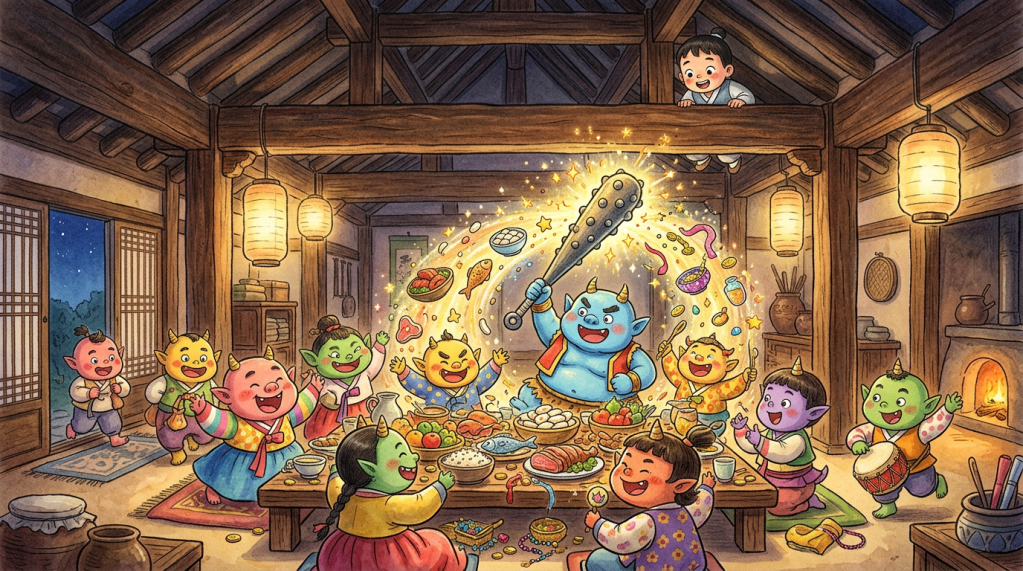
Before long, goblins arrive and begin a wild, magical feast. They sing, dance, and use a wondrous club to make whatever they desire appear before them. Hidden and watching in amazement, the man accidentally cracks one of the hazelnuts with a loud sound. The goblins mistake the noise for something dangerous—often believing the house is breaking apart—and flee in panic, leaving the magical club behind. In this unexpected way, the kind man becomes the owner of the goblin’s club, and with it, he is able to escape poverty and live comfortably.
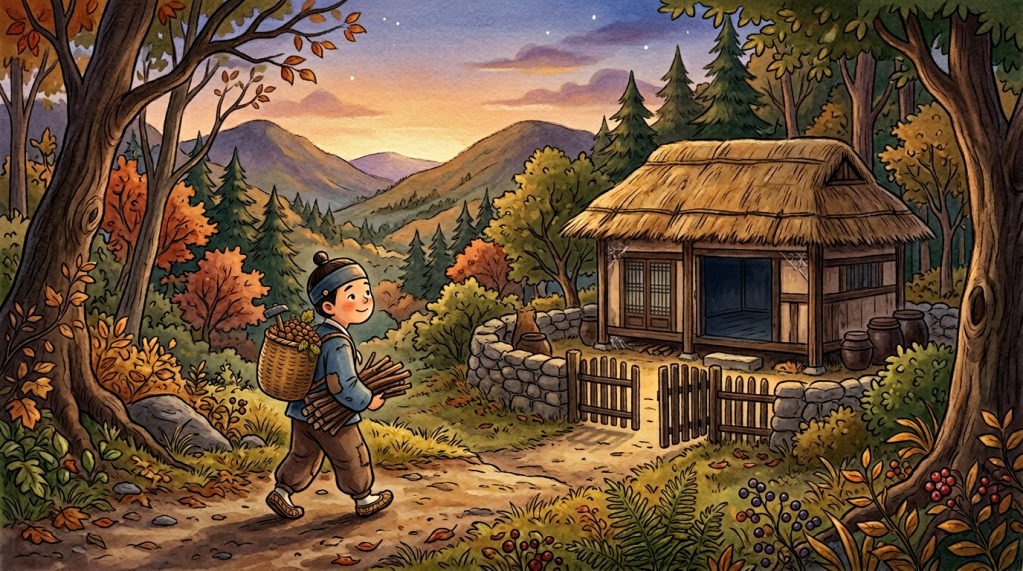
But the story does not end there. News of his sudden fortune reaches a greedy older brother, or in some versions a selfish neighbor, who wants the same reward without sharing the same good heart. He goes to the mountain and tries to repeat everything exactly. Yet from the very beginning, his attitude is different. When the hazelnuts roll toward him, he thinks of himself and his wife before thinking of his parents, revealing his selfish nature. He reaches the goblins’ house and imitates the earlier events, hoping to steal the same magical luck.
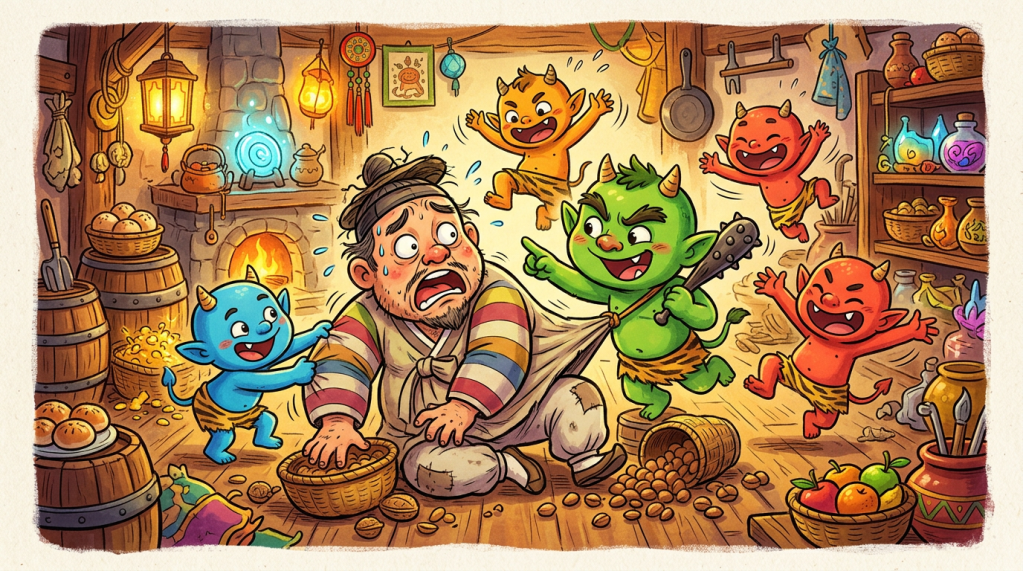
This time, however, the outcome is completely different. The goblins are not fooled. Instead of running away, they catch the greedy imitator and punish him harshly. In different versions of the tale, he is beaten, humiliated, or physically distorted in comic and exaggerated ways. The contrast is clear: the kind-hearted person is rewarded, but the one who imitates only the result—without the goodness behind it—is punished. This structure makes The Goblin’s Club one of the clearest examples of poetic justice in Korean folklore.
What makes this story especially interesting is that it is not just about magic or luck. It is also about the danger of greed and the emptiness of copying others for selfish gain. The Korean Encyclopedia of National Culture describes it as a tale of imitation and retribution, where blessing comes to the good, while punishment falls on the wicked who try to seize fortune without virtue. In that sense, the magical club is not simply a tool for wealth—it becomes a way of testing people’s hearts.
There is also something deeply human and even modern in the story. Many people still dream of sudden fortune, easy success, or a shortcut to a better life. That is part of what makes the tale feel timeless. The goblin’s club reflects a very old wish for abundance, while the downfall of the greedy imitator reminds readers that wealth without character can quickly turn into disaster. Even in a modern world, this lesson still feels familiar.
The goblins themselves also add a special charm to the story. In Korean tradition, goblins are not always purely evil or terrifying. They can be funny, mischievous, magical, and strangely human. In The Goblin’s Club, they create a world that is both playful and unpredictable, making the folktale feel exciting rather than frightening. Their magical feast, their songs and dancing, and their sudden panic all give the story a bright theatrical energy that works beautifully in storytelling and illustration.
In the end, The Goblin’s Club remains a beloved Korean folktale because it combines fantasy with a lesson that is easy to understand and hard to forget. Kindness is rewarded, greed is exposed, and imitation without virtue leads to failure. Beneath the fun and wonder of goblins and magic lies a simple truth: what matters most is not the treasure we chase, but the heart we bring with us. That is why this old story still feels lively, meaningful, and wonderfully alive today.
 KOREAN FOLKTALES
Leave a comment