The Tale of the Rabbit is a classic Korean folktale about a clever rabbit who escapes the Dragon King’s underwater palace through wit and quick thinking. Funny, lively, and surprisingly sharp, it remains one of Korea’s most memorable traditional stories.
The Tale of the Rabbit is a classic Korean folktale about a clever rabbit who escapes the Dragon King’s underwater palace through wit and quick thinking. Funny, lively, and surprisingly sharp, it remains one of Korea’s most memorable traditional stories.
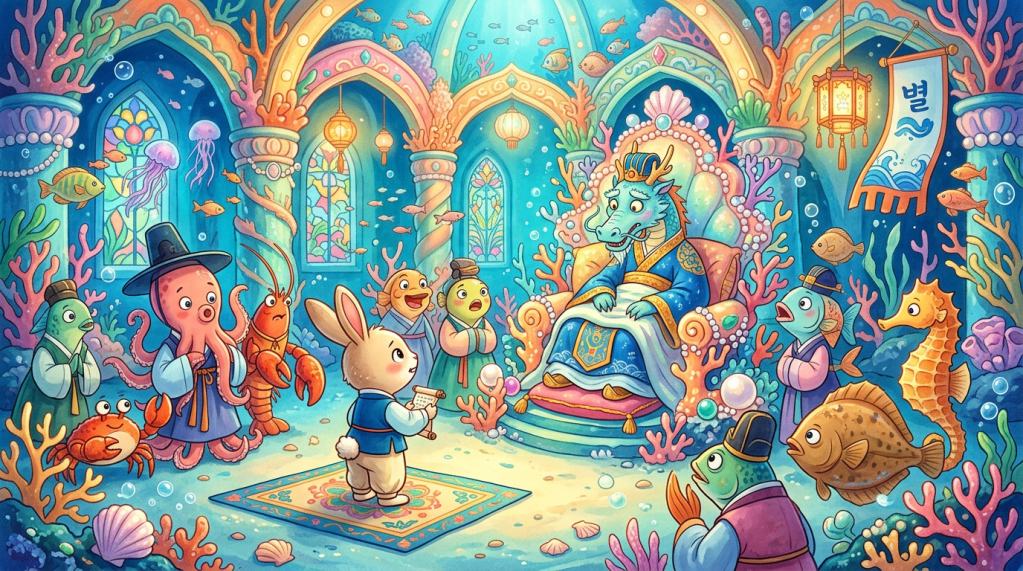
When the turtle finally meets a rabbit, he does not speak of danger or fear. Instead, he fills the rabbit’s ears with wonderful stories about the beauty of the underwater palace. He describes it as a magical place full of wonder, splendor, and royal luxury. Curious and unsuspecting, the rabbit agrees to follow him beneath the sea.But the moment the rabbit arrives, he realizes that something is terribly wrong. He has not been invited as an honored guest at all. The Dragon King wants his liver, and the rabbit suddenly finds himself trapped in a world far from home, surrounded by danger. It is a frightening moment, but instead of giving in to panic, the rabbit does something much more powerful: he thinks.

In a flash, the rabbit comes up with a brilliant excuse. He tells the Dragon King that he left his liver safely on land and did not bring it with him. As absurd as it sounds, the king and his court believe him. Hoping to recover the precious liver, they send the rabbit back to the surface with the turtle. The moment he reaches land, the rabbit reveals the trick, laughs at their foolishness, and disappears into the forest, safe at last.
That is what makes this folktale so delightful. The rabbit does not win because he is strong, powerful, or protected. He wins because he keeps calm under pressure and uses his mind when it matters most. In that way, the story feels timeless. It reminds us that intelligence and quick thinking can sometimes be far more powerful than force.
What makes The Tale of the Rabbit even more interesting is that it is not just a fun animal story. Many readers have also understood it as a satire of society. The Dragon King and his palace can be seen as symbols of foolish or corrupt authority, while the rabbit represents ordinary people who must rely on wit and resourcefulness to survive. Beneath its light and humorous surface, the story carries a deeper message about power, survival, and the strength of the underestimated.

Over time, this tale has appeared in many forms and under many names, including Tokkijeon, Byeoljubujeon, and Sugungga. It has lived on not only in written literature, but also in pansori and performance traditions, proving just how deeply rooted it is in Korean culture. That lasting presence is part of what makes it such a meaningful story to revisit today.
In the end, The Tale of the Rabbit is memorable because it is both entertaining and meaningful. It gives readers a story full of danger, humor, and clever twists, while also leaving behind a lesson that still feels relevant: when facing a difficult situation, a clear mind and a quick wit can be your greatest strengths. That is why this old Korean folktale still feels fresh, warm, and wonderfully alive.
 KOREAN FOLKTALES
Leave a comment