Among Korea’s traditional folktales, Samnyeongogae, or Three-Year Pass, is one of the most memorable stories about how fear can shape the way people live. At the center of the tale is a mountain pass with a troubling rumor: anyone who falls there will die within three years. Simple on the surface yet surprisingly clever in its message, the story has long been loved as a folktale that teaches the value of wisdom, positive thinking, and freedom from superstition.
The story usually begins in a quiet village near a steep mountain path known as Samnyeongogae. People in the village believe that if someone slips and falls on that hill, their life will be shortened to only three more years. Because of this belief, everyone crosses the pass with fear in their hearts. One day, an old man loses his footing and tumbles on the slope. The moment he falls, he remembers the frightening rumor and becomes overwhelmed with fear.
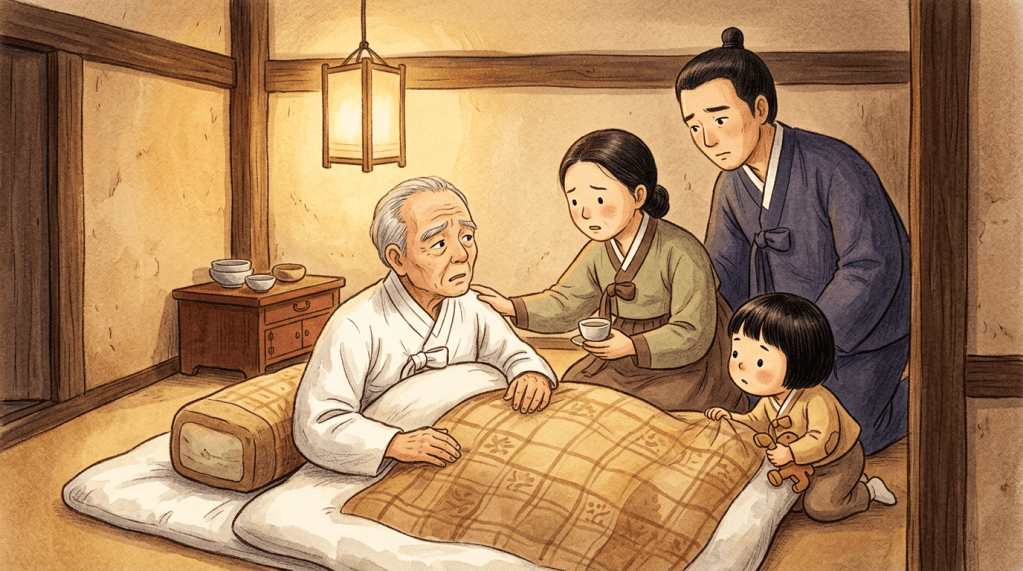
After returning home, the old man can think of nothing else. He becomes weak, anxious, and hopeless, convinced that death is now waiting for him. In many retellings, he stops eating well, loses his strength, and spends his days in sadness because he believes his fate has already been decided. The real force working against him is no longer the hill itself, but the fear he carries in his own mind. This is what gives the story its lasting emotional power: it shows how deeply belief can affect a person’s body and spirit.
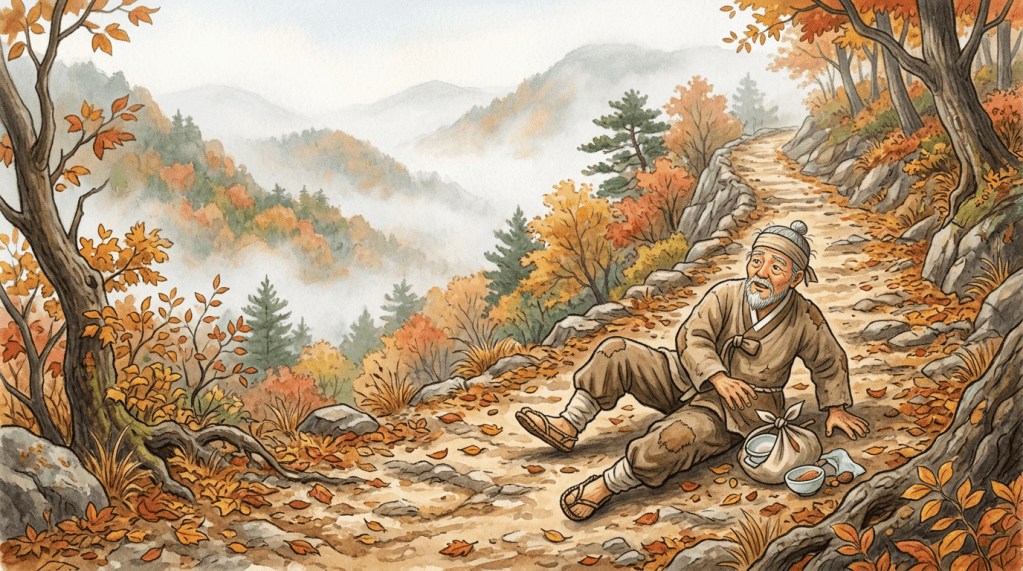
But Samnyeongogae does not end in despair. A clever person—depending on the version, a child, a friend, or someone in the family—comes up with a simple but brilliant idea. If one fall means only three more years to live, then falling many times should add many more sets of three years. Hearing this playful logic, the old man begins to see the superstition differently. Instead of trembling with fear, he laughs. In some versions, he even goes back to the pass and rolls down it again and again, determined to live for many more years.
This reversal is the heart of the tale. What once seemed like a curse is transformed by wit and perspective. The old man recovers not because the hill changes, but because his thinking changes. His fear loses its grip, and the burden that had been weighing down his body and heart begins to disappear. The folktale reminds us that some of the things that frighten us most gain their power from the meaning we give them.
That is why Samnyeongogae has often been understood as more than a humorous old story. The Korean Folk Encyclopedia describes it as a folktale that developed from a place legend into a humorous narrative emphasizing reverse thinking, and later into a children’s tale carrying a lesson against superstition. In other words, the story is not simply about an unlucky hill. It is about how wisdom can break fear, how humor can loosen the hold of dark beliefs, and how a fresh way of thinking can restore hope.
The story also remains relatable today. Even in modern life, people often become trapped by anxious thoughts, rumors, or imagined worst-case outcomes. Like the old man in the tale, we sometimes suffer not only because of what happened, but because of what we believe will happen next. Samnyeongogae speaks to that human experience with warmth and simplicity. It gently tells readers that fear does not always deserve our trust, and that a shift in perspective can become its own kind of healing.
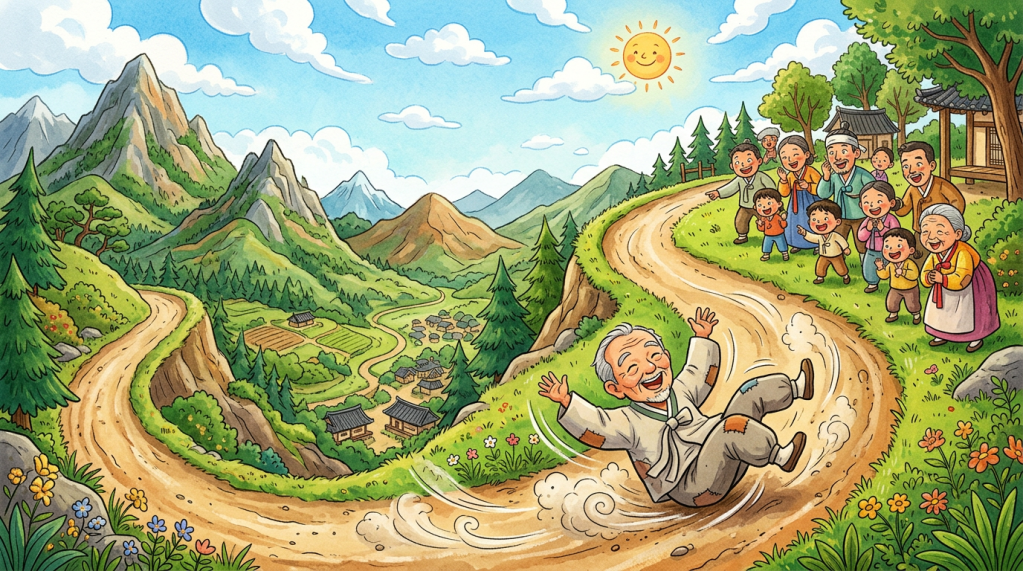
In the end, Samnyeongogae continues to be cherished because it turns a dark superstition into a story full of wit, resilience, and hope. It is a folktale that makes people smile, but it also leaves behind a meaningful lesson: when fear controls the mind, life grows smaller—but when wisdom enters, even an ominous hill can become the place where courage begins.
 KOREAN FOLKTALES
Leave a comment