Short Intro:
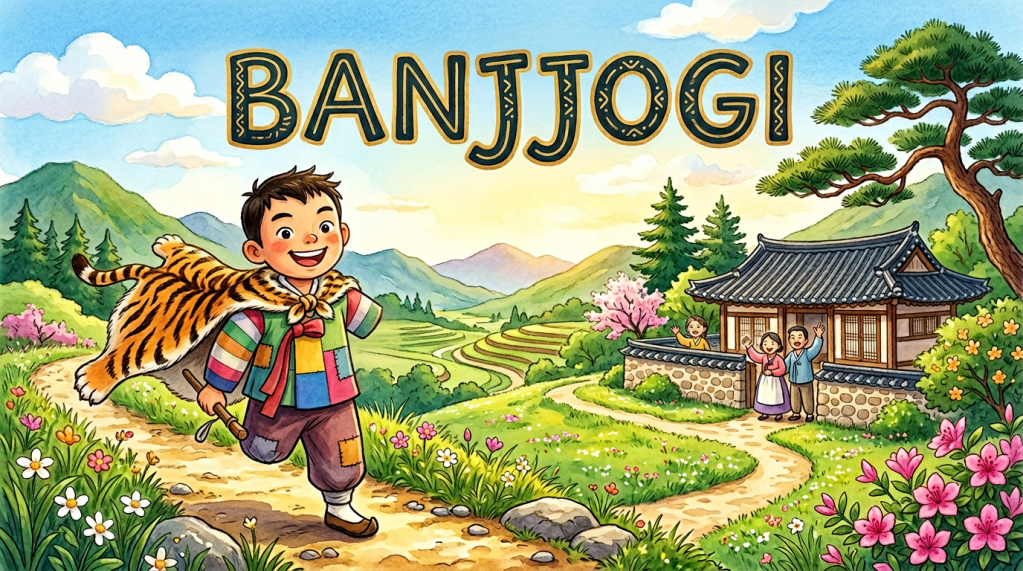
Banjjogi is a classic Korean folktale about a boy born with only half a body who overcomes danger, defeats a tiger, and proves his worth through courage and intelligence. The story delivers a timeless message: true strength is not measured by appearance.
Among Korean folktales, Banjjogi is one of the most unusual and inspiring stories. Its hero is born with only half a body, and at first he seems weak or incomplete. But as the story unfolds, he proves that true strength does not depend on appearance. Through courage, skill, and intelligence, Banjjogi overcomes enemies, surprises his family, and wins a happy future. That is what makes this folktale so memorable.
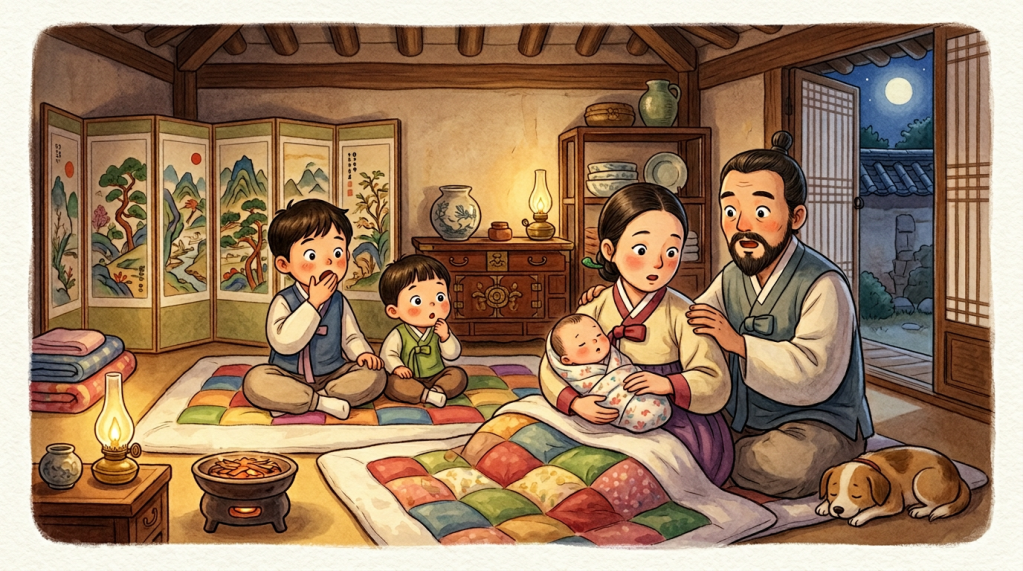
The story begins with a family praying for sons. According to the tale, the kind of food the mother eats during the ritual affects the children who are born. The children who come from whole portions are born whole, while the youngest, who is linked to only half a portion, is born as Banjjogi, a child with only half a body. Because of this strange appearance, he is treated as lesser than his brothers from the beginning.
One day, the boys’ father goes to Mount Geumgang to hunt a tiger, but he disappears and is killed. The brothers grow up with the burden of avenging him. As they train in hunting and strength, Banjjogi unexpectedly shows the greatest ability of all. Although his body looks incomplete, his talent is extraordinary. Yet his older brothers do not truly respect him and try to leave him behind.
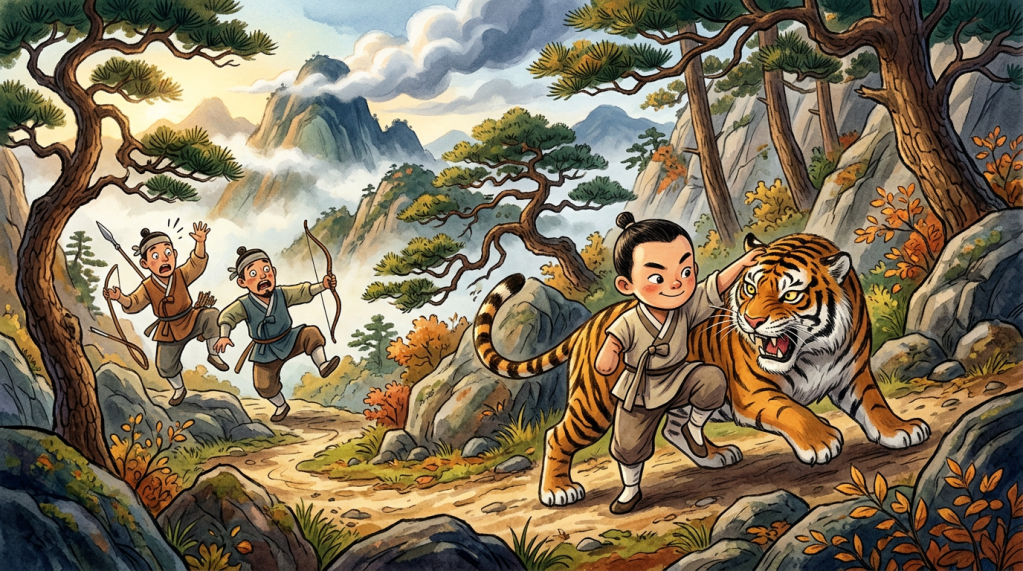
Banjjogi refuses to remain excluded. He follows the journey and becomes the decisive figure in the hunt for the tiger. Along the way, he meets a helpful old red-bean-porridge seller, and with that aid he defeats not only the tiger but also the tiger’s wife. In the end, it is Banjjogi—not his stronger-looking brothers—who plays the central role in avenging the father and bringing home the tiger skin.
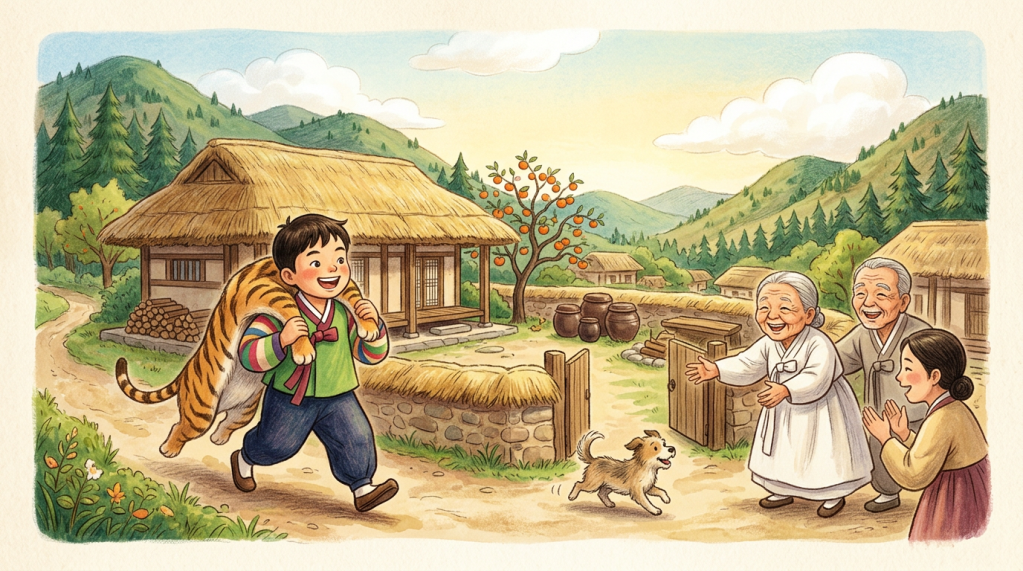
But the story does not end there. A wealthy old man becomes greedy when he sees the tiger skin and proposes a challenge involving his daughter. Once again, Banjjogi succeeds—not only through force, but through wit. He outsmarts the rich man, wins the contest, and marries the daughter. The boy once dismissed because of his appearance finally returns home with honor, family, and happiness.
What makes Banjjogi so powerful is the way it overturns expectations. In many stories, the strongest-looking character becomes the hero. Here, the child who seems physically lacking is actually the most capable. The folktale reminds readers that outward form does not define inner worth. Strength may appear in unexpected shapes, and intelligence can be greater than brute force.
The Korean encyclopedia also notes that the story combines two kinds of heroic power. One is physical or martial power, shown in hunting and defeating the tiger. The other is intellectual power, shown when Banjjogi outwits the greedy rich man. Because of this, the folktale celebrates not just bravery, but also cleverness.
For modern readers, Banjjogi still feels meaningful. It speaks to anyone who has been underestimated or judged by outward differences. The tale says clearly that limitation does not erase possibility. Sometimes the person others overlook is the one most capable of changing the ending.
 KOREAN FOLKTALES
Leave a comment