Short Intro:
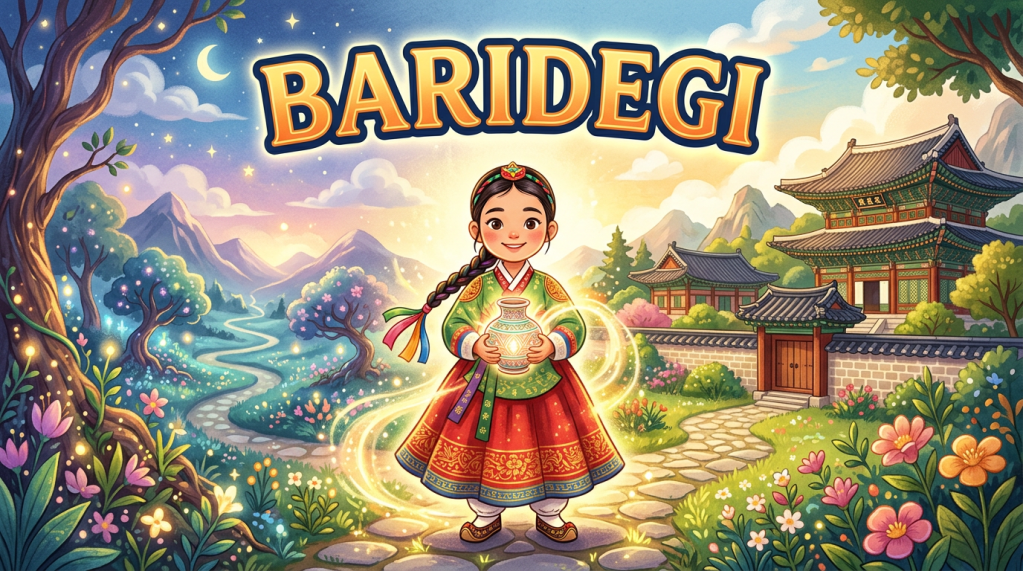
Baridegi is a classic Korean myth about an abandoned princess who journeys to the otherworld to bring back the life-giving water that can save her dying parents. Through sacrifice, courage, and devotion, she becomes one of the most meaningful female figures in Korean narrative tradition.
Among Korean mythic tales, Baridegi is one of the most powerful stories of sacrifice, endurance, and spiritual destiny. Unlike simple folktales that end with a lesson for children, this story carries the weight of myth. It tells of a princess abandoned at birth, a desperate journey to the other world, and a daughter who saves the very parents who once cast her away. Because of this emotional and symbolic depth, Baridegi remains one of the most important narratives in Korean tradition.
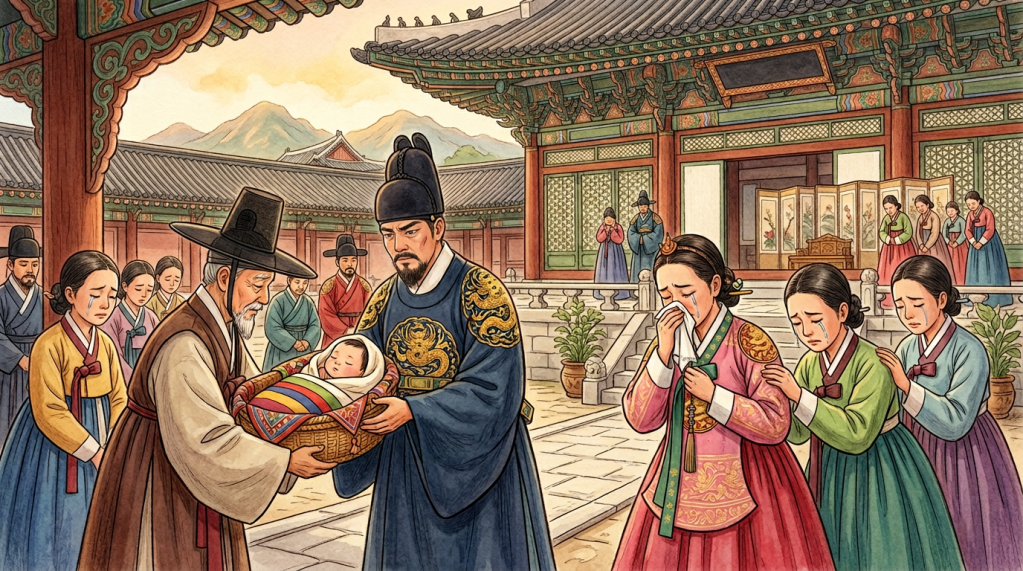
The story begins with royal parents who long for a son. Instead, they continue to have daughters. When the seventh child is born and is once again a girl, the king rejects the baby and abandons her. That child becomes Baridegi, whose name is associated with being cast away. Though rejected at birth, she survives and grows up far from the royal protection that should have been hers.
Years later, Baridegi’s parents become gravely ill. The only cure is said to be a sacred life-giving water, often called yaksu, found in a distant otherworldly place. The king asks his daughters to go in search of it, but the older sisters refuse. At last, the abandoned daughter, Baridegi, is brought back into the story. She alone accepts the task and begins the long, dangerous journey to save her parents.
Her road is not an ordinary one. Baridegi travels toward the realm connected to death and the afterlife, crossing into a spiritual landscape far beyond the human world. There she meets the guardian of the life-giving water and must endure trials, make sacrifices, or fulfill difficult conditions in order to obtain it. This journey transforms her from an abandoned child into a figure of extraordinary courage and spiritual power.

At last, Baridegi secures the healing water and returns. With it, she revives or saves her parents, accomplishing what none of the others were willing to do. The daughter who was once discarded becomes the one who restores life. Her deed is finally recognized, and in Korean tradition she comes to hold an elevated sacred status. The story is not only about filial devotion, but also about dignity reclaimed through action.
One of the most remarkable features of Baridegi is its emotional complexity. This is not simply a story of obedience. It is a story of a daughter who responds to cruelty not with revenge, but with strength. She acts not because the world has been fair to her, but because she becomes greater than the injustice she suffered. That moral and emotional tension is what gives the story its lasting power.

The Korean encyclopedia also notes that the narrative reflects Korean ideas about the afterlife, the soul, and the world beyond death. It emphasizes filial piety, but also reveals a deeper tension between patriarchal preference for sons and the spiritual power embodied by a daughter. In that sense, Baridegi is both a myth of salvation and a profound story about gender, suffering, and transcendence.
For modern readers, Baridegi remains strikingly relevant. It speaks to those who have felt rejected, overlooked, or unwanted. More importantly, it offers a powerful vision of transformation: the abandoned child becomes the rescuer, and the powerless become sacred. Few stories express so clearly that true worth is not given by birth status, but revealed through courage, endurance, and compassion.
 KOREAN FOLKTALES
Leave a comment