Short Intro:
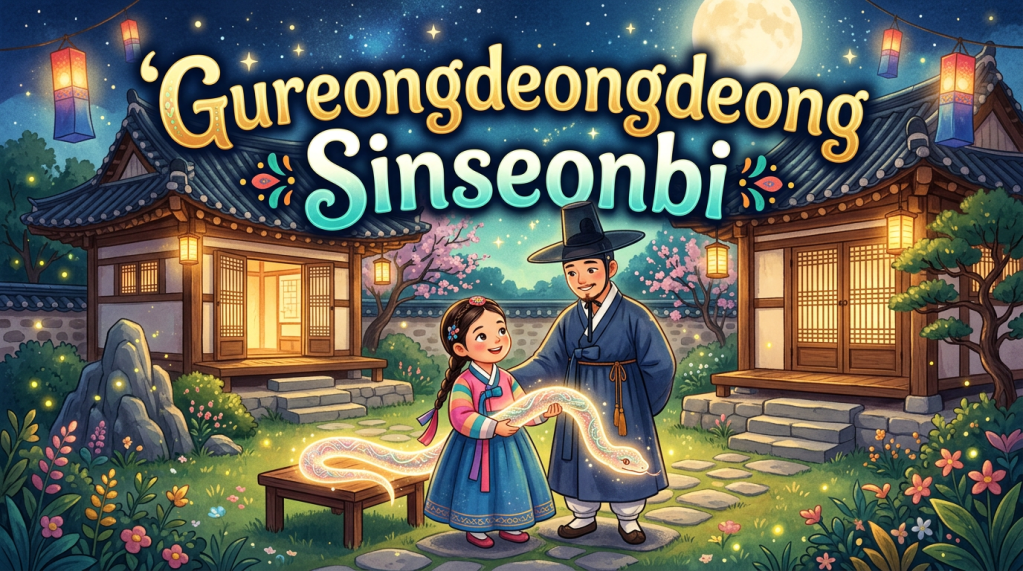
Gureongdeongdeong Sinseonbi is a classic Korean folktale about a serpent bridegroom and the young wife who journeys through hardship to find him again. Blending transformation, mystery, and devotion, the story reveals how love can survive even after separation and loss.
Among Korean folktales, Gureongdeongdeong Sinseonbi is one of the most mysterious and memorable. It tells the story of a strange serpent bridegroom, a brave young woman, a broken promise, and a long journey toward reunion. Unlike simple moral tales, this story blends fantasy, romance, and hardship into a powerful narrative about loyalty and perseverance. That emotional depth is one reason the tale continues to fascinate readers today.
The story begins with an old woman who longs deeply for a child. At last, her wish is granted, but the child she gives birth to is not an ordinary boy. He is a snake-like being. As he grows older, he asks his mother to arrange a marriage with the daughter of a neighboring household. The eldest and second daughters refuse, but the youngest daughter agrees, and she becomes the serpent bridegroom’s wife.
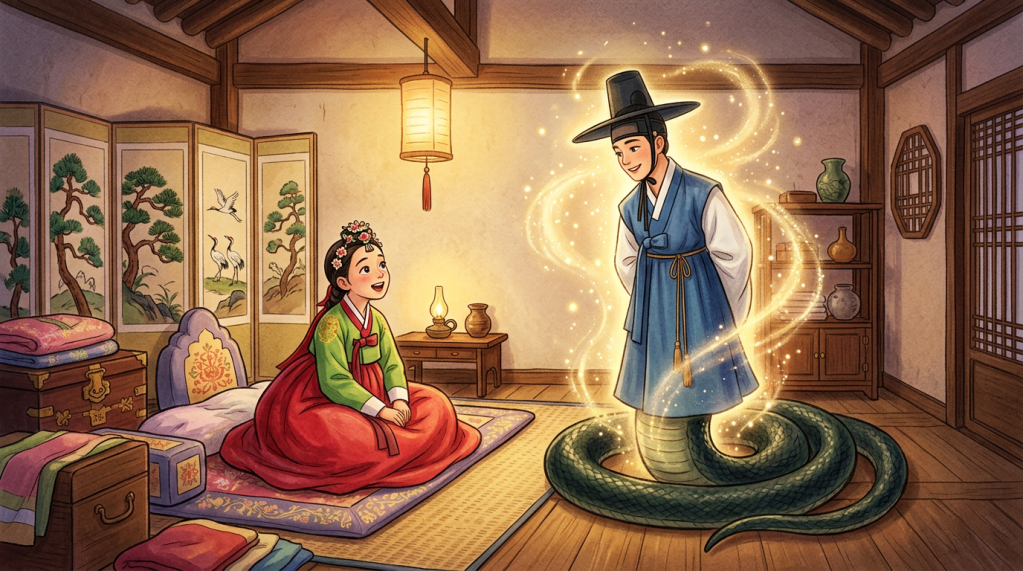
On their wedding night, the shocking truth is revealed. The serpent sheds his skin and becomes a handsome young man. By day he remains bound to his strange outward form, but by night he appears as a human husband. In some versions he eventually leaves behind the serpent form completely. Before departing to take the state examination, he gives his wife strict instructions: she must never show his serpent skin to anyone else.
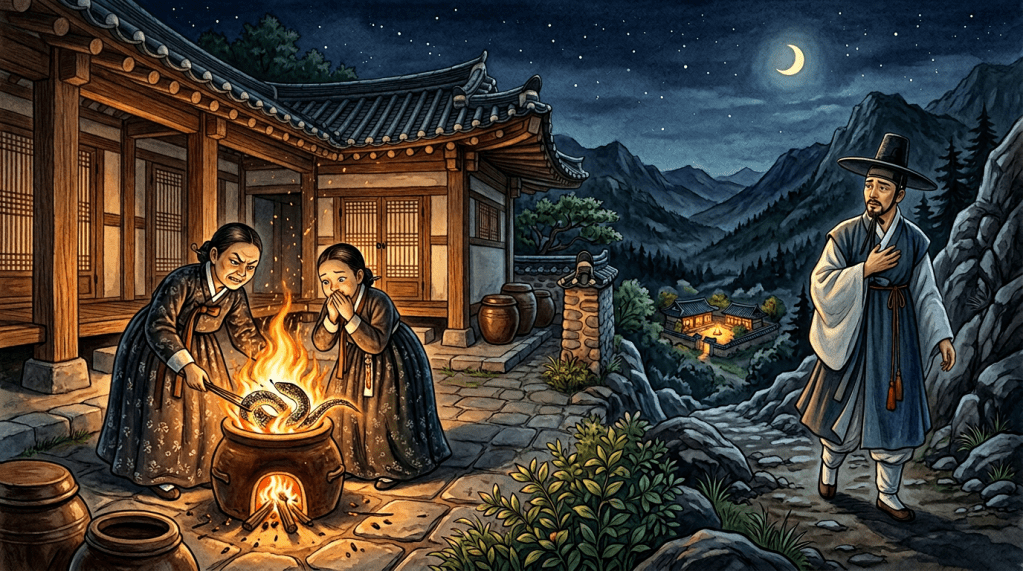
However, the secret does not remain safe. Through the wife’s mistake, her older sisters discover the hidden skin and burn it. Far away, the husband senses what has happened through the smell of the burning skin, and he does not return home. Instead, he disappears into another realm. What began as a miraculous marriage turns into separation and sorrow.
The youngest daughter does not give up. She sets out to search for her lost husband, asking for directions from people she meets along the way and eventually reaching an underground world where he now lives. There she discovers that he is with another woman. Yet rather than surrendering to despair, she finds a way to make him recognize her again, often through song.
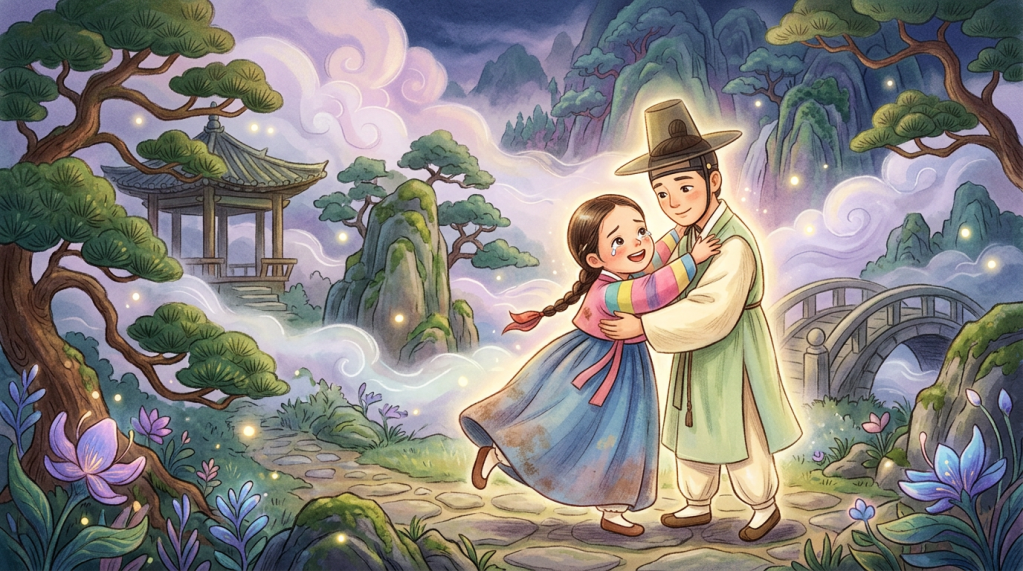
The final part of the story is shaped by trials. The wife competes with the new woman in difficult tasks, such as fetching water or bringing back a tiger’s eyebrow, and she succeeds. Through endurance, courage, and devotion, she wins back her husband and the couple are reunited. The folktale closes not in tragedy, but in restored love and hard-won happiness.
What makes this folktale especially striking is its layered meaning. On the surface, it is a magical tale about a serpent husband. At a deeper level, it is a story about trust, taboo, separation, and the determination to overcome suffering. The encyclopedia notes that the heroine’s journey and trials contain deep mythic symbolism, and that her suffering is connected to a broader pattern of women’s hardship in Korean narrative tradition.
For modern readers, Gureongdeongdeong Sinseonbi feels surprisingly fresh. It reminds us that love is not simply a beautiful feeling but also an act of endurance. Real devotion requires courage, patience, and the strength to continue even after loss. In that way, this old Korean folktale still speaks to contemporary readers through its haunting imagery and emotional truth.
 KOREAN FOLKTALES
Leave a comment