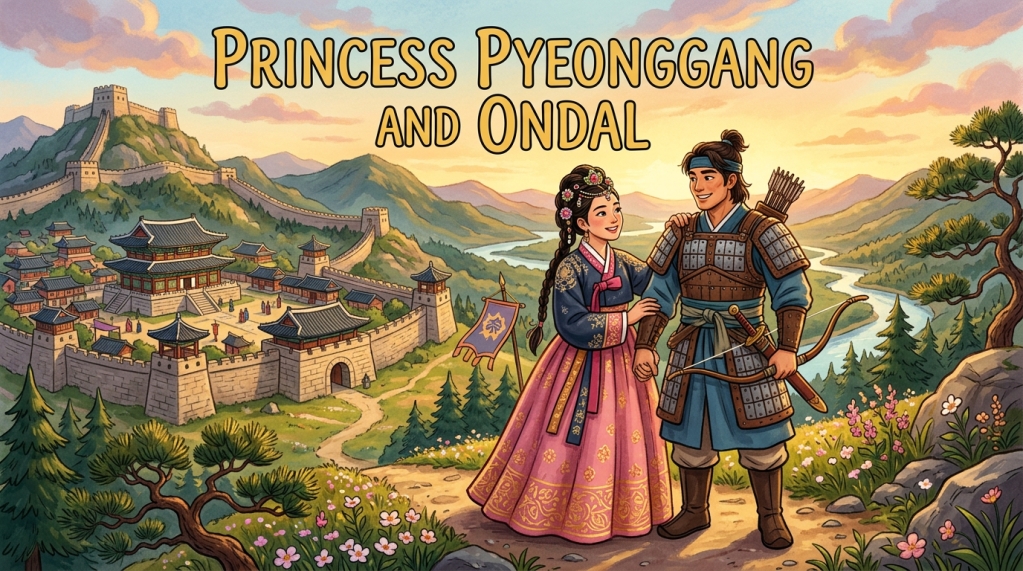
Short Intro:
Princess Pyeonggang is a classic Korean tale about a princess who defies royal expectations, marries Ondal, and helps him rise from ridicule to honor. The story endures as a moving example of loyalty, wisdom, and the power of believing in someone’s hidden potential.
Among Korean historical folktales, Princess Pyeonggang is one of the most beloved stories of courage, loyalty, and unexpected love. It tells of a princess who defies royal expectations, chooses a man mocked as a fool, and helps him become a respected general. More than a simple romance, the tale is remembered as a story about seeing hidden worth in someone others dismiss.
According to the story preserved in Korean historical tradition, Princess Pyeonggang was the eldest daughter of King Pyeongwon of Goguryeo. When she was young, she cried often, and the king jokingly said he would marry her off to Ondal, a man widely known as a fool. Years later, when the princess came of age, the king tried to arrange a noble marriage for her. But Pyeonggang refused. She insisted on keeping the earlier promise and chose Ondal instead.

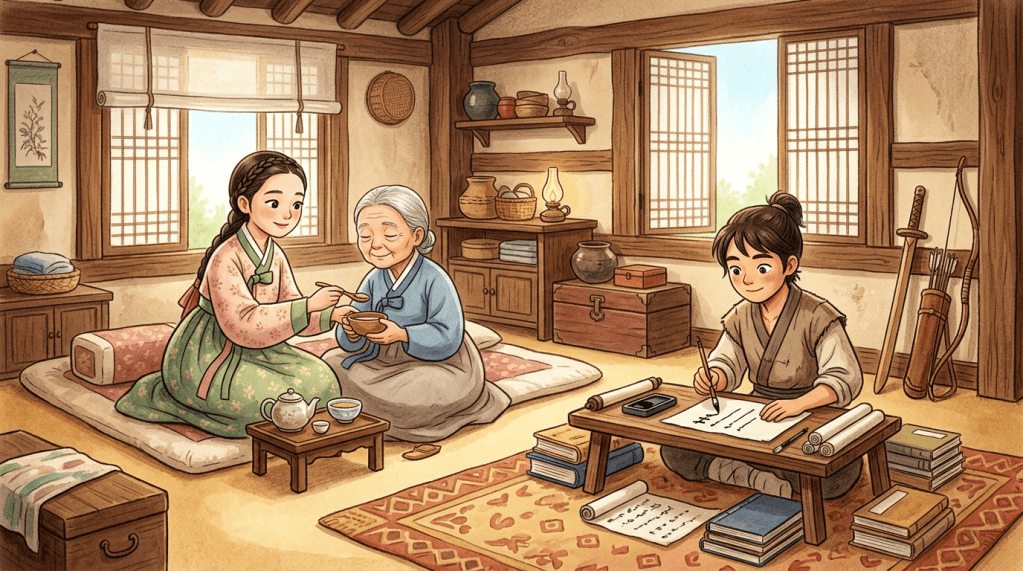
The king was furious and cast her out of the palace. Undeterred, the princess went to Ondal’s humble home and married him. There she cared for his blind mother and began guiding her husband with patience and wisdom. In many retellings, Ondal had been mocked as “Babo Ondal,” or Fool Ondal, but Pyeonggang saw something in him that others did not. She believed he could become more than the world expected.
With the princess’s support, Ondal trained in learning and martial skill. Before long, his talent began to show. During a royal hunting event, he distinguished himself so clearly that he came to the king’s attention. Ondal was eventually appointed as a military figure, and later won merit in battle when Goguryeo faced invasion. The man once ridiculed by society rose to honor, thanks not only to his own effort but also to the steadfast faith of his wife.
The story takes on a tragic and moving tone in its final part. Under King Yeongyang, Ondal fought in an attempt to recover lost territory from Silla, but he was struck by an arrow and died. When people tried to move his coffin, it would not budge. Only after Princess Pyeonggang came and gently told him it was time to return did the coffin finally move, allowing him to be buried. This ending gives the story a deep emotional power that goes beyond romance alone.
What makes this tale so memorable is the character of Princess Pyeonggang herself. She is not passive, obedient, or ornamental. She makes her own choice, leaves privilege behind, and transforms her husband’s life through intelligence, devotion, and determination. The Korean encyclopedia notes that later generations praised her as a woman who married for sincere affection rather than status, and as an example of a wise wife who helped her husband achieve greatness.

For modern readers, Princess Pyeonggang still feels fresh. It reminds us that love can be an act of belief, and that real greatness may first appear in hidden form. It also presents a heroine who acts with unusual independence within a rigid society. That is why this old Korean tale continues to speak to readers today—not only as a love story, but as a story of vision, courage, and trust.
 KOREAN FOLKTALES
Leave a comment