Short Intro:
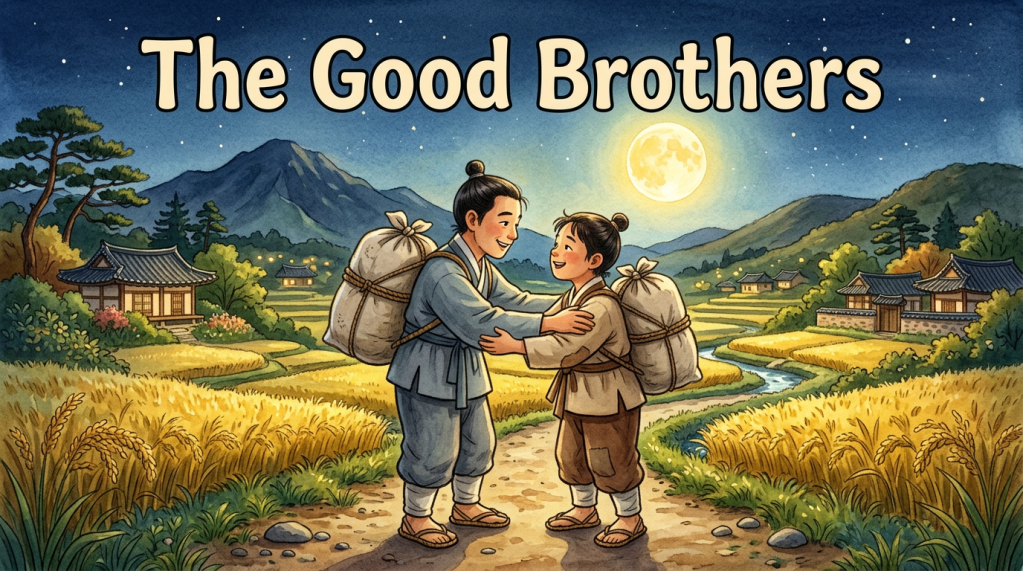
The Good Brothers is a beloved Korean folktale about two brothers who secretly give their harvest to one another, each believing the other is more in need. Through its quiet and moving story, the tale teaches generosity, humility, and the true meaning of family love.
Among Korea’s many traditional folktales, The Good Brothers stands out for its gentle warmth rather than dramatic conflict. It is a story about two brothers who care for each other so deeply that each secretly gives away part of his own harvest to help the other. Unlike tales filled with monsters, magic, or revenge, this one shines through simple kindness. That quiet emotional power is exactly what has made it a beloved story for generations.
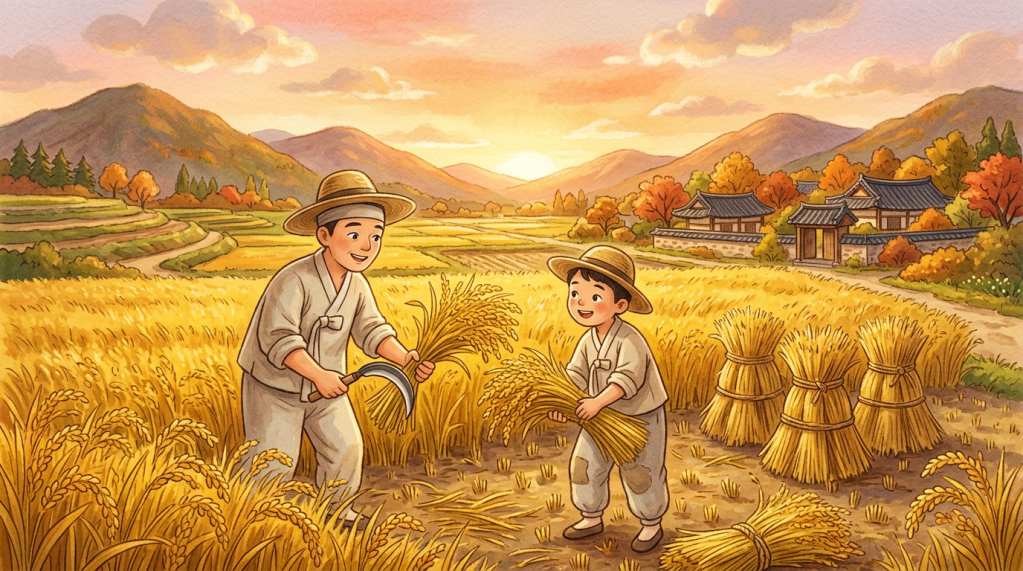
The story usually begins after the brothers have separated their households, though they still live close to one another and continue farming the land. One brother is married and has a family to support, while the other lives alone. After the autumn harvest, they divide the rice fairly and place their own bundles in separate storage piles. On the surface, everything seems equal. Yet each brother lies awake at night, worrying that the other may actually need more.
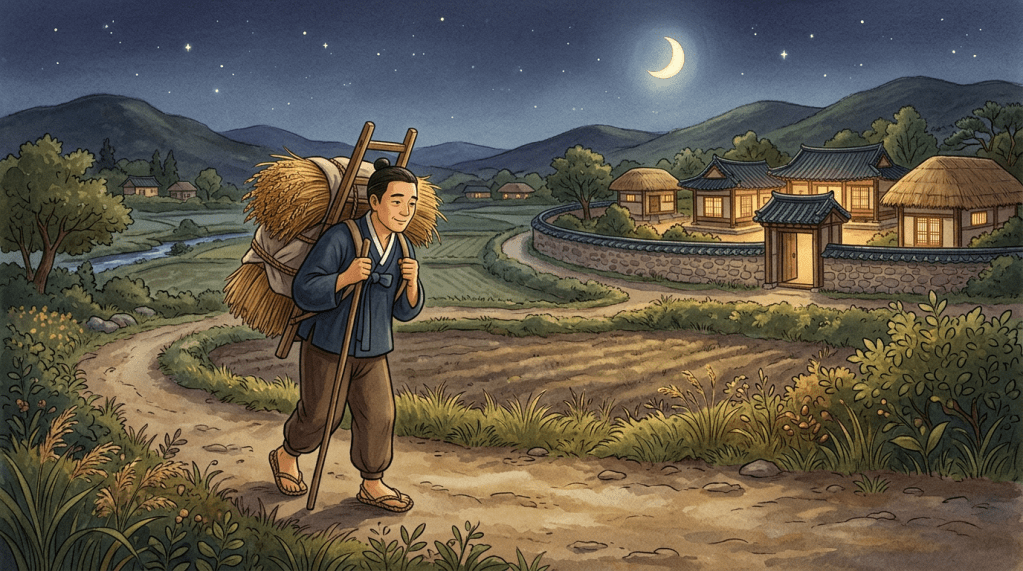
The older brother thinks of his younger brother living by himself and wonders who will care for him in the future. He quietly tells himself that a man without a family may one day feel lonely and vulnerable, so he decides that his brother should have more grain. Late at night, he carries a bundle of rice to his brother’s storehouse without saying a word. He does not want praise or thanks. He simply wants his brother to be secure.
At the same time, the younger brother is having the opposite thought. He looks at his married brother’s life and imagines the burden of feeding a whole family. He reasons that his brother, with a wife and children, must need more food than he does. So under the cover of darkness, he also picks up a bundle of rice and carries it to his brother’s storehouse. Like his brother, he keeps his act of love a secret.
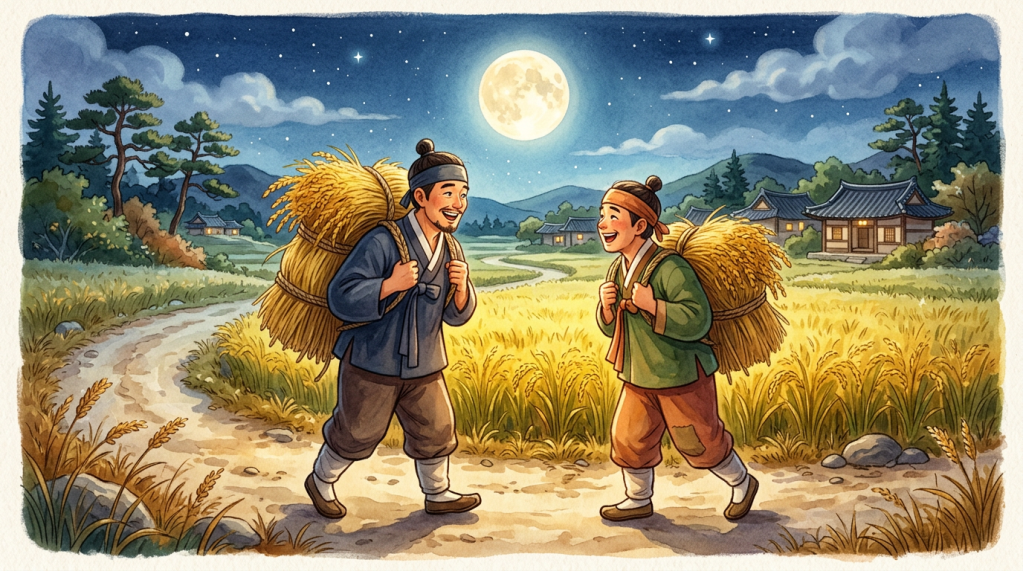
This continues until one night the brothers meet on the road, each carrying rice for the other. In that moment, the truth is revealed: both had been sacrificing for the other out of pure love. The image is unforgettable—two brothers standing in the moonlight, each with a bundle on his back, suddenly realizing that they have been thinking with the same heart. The scene is simple, but emotionally powerful, and it captures the deepest meaning of family affection.
What makes The Good Brothers so special is that there is no villain in the story. There is no trick, no punishment, and no magical reward. The emotional center of the tale is mutual generosity. Each brother believes the other deserves more. Each puts the other’s needs before his own. In a world where many stories are driven by conflict, this folktale reminds us that goodness itself can be the main event.
The story also reflects important values in Korean tradition, especially family duty, humility, and shared responsibility. Love is not expressed through grand speeches but through action. The brothers do not announce their virtue; they practice it quietly. This modest, practical kind of affection is one reason the story continues to resonate with readers today, including children encountering Korean folktales for the first time.
For modern readers, The Good Brothers offers a timeless lesson. Real generosity is often invisible. The most meaningful kindness may happen when no one is watching. The tale encourages us to care for others not because we expect recognition, but because love naturally leads us to share. In that way, this old Korean folktale still speaks clearly to modern life: when people quietly look after one another, communities become stronger and warmer.
 KOREAN FOLKTALES
Leave a comment