Short Intro
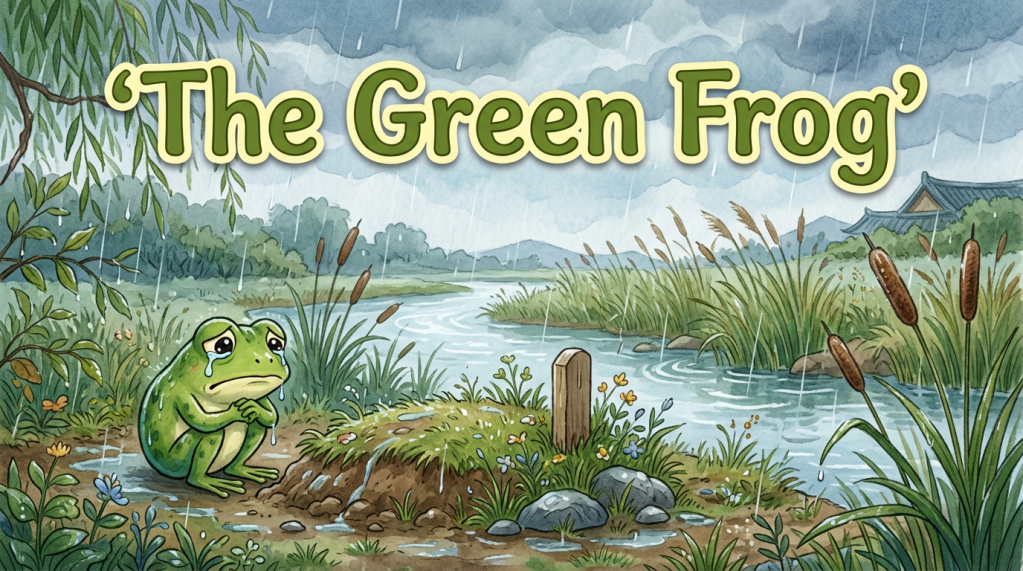
The Green Frog is a classic Korean folktale about a little frog who always does the opposite of what his mother says, only to regret it too late. The story explains why frogs cry when it rains and leaves readers with a gentle but unforgettable lesson about love, obedience, and remorse.
Among Korean folktales, The Green Frog is one of the simplest and most emotionally powerful. At first, it feels like a playful story about a stubborn little frog who never listens. But as the tale unfolds, it becomes a story about regret, filial love, and the pain of understanding something too late. That emotional turn is what has made this folktale so memorable for generations.
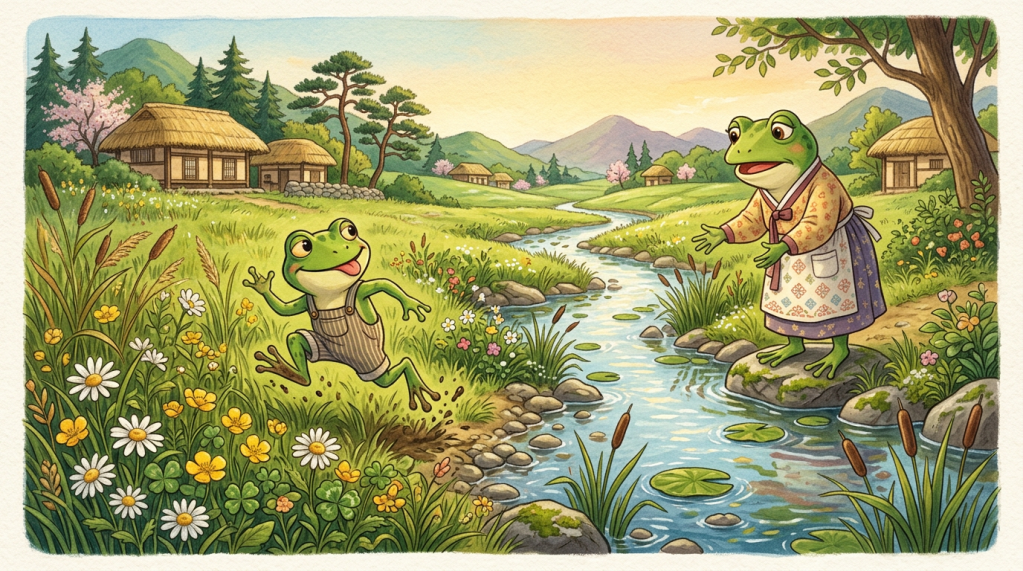
The story begins with a young green frog who always does the opposite of what his mother tells him to do. If she tells him to go east, he goes west. If she tells him to stay quiet, he makes noise. No matter how patiently she speaks, the frog refuses to listen. His habit of doing everything in reverse causes his mother endless worry and sadness.
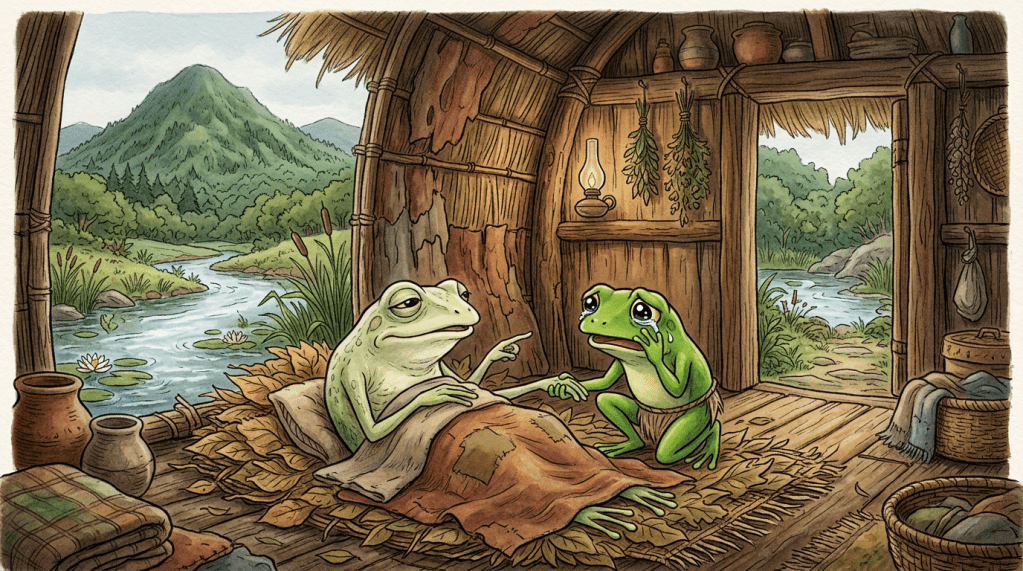
As time passes, the mother frog grows weak. Near the end of her life, she knows her son so well that she tries one last clever idea. Wanting to be buried safely on the mountain, she tells him the opposite: that he should bury her by the stream. For the first time, however, the frog is deeply moved by her final words.
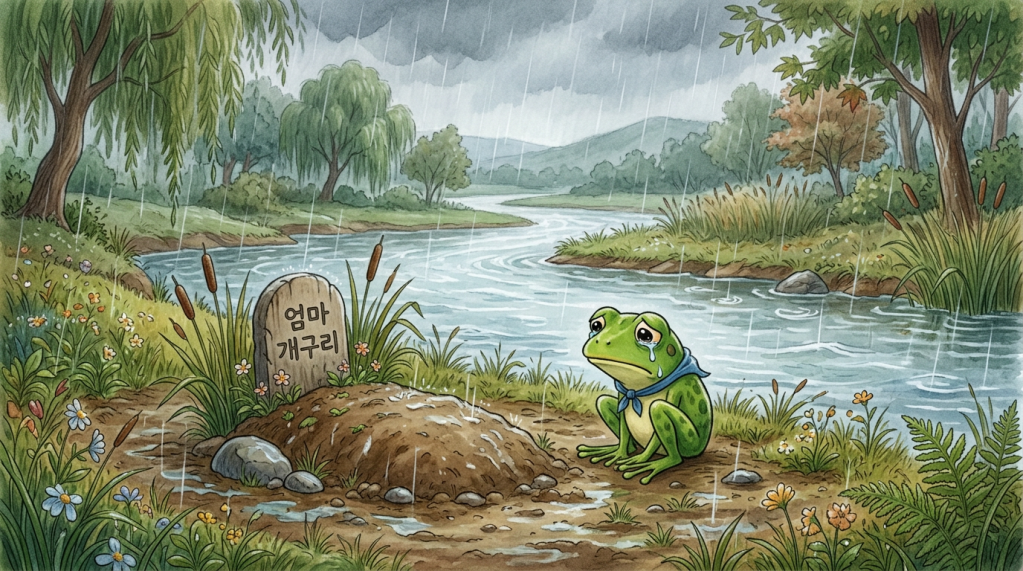
Filled with sorrow and regret, the little frog decides that this time he will not disobey. He follows exactly what his mother said and buries her beside the stream. But this is the tragedy of the story: because her final words were spoken in reverse, the frog unknowingly places her grave in the very place she feared most.
After that day, whenever rain begins to fall, the green frog cries sadly by the stream. He fears that the rising water will wash away his mother’s grave. His cries are no longer stubborn or playful. They are filled with grief, love, and late remorse. That is why, according to the folktale, frogs cry loudly when rain is coming.
What makes The Green Frog so enduring is its emotional simplicity. The lesson is not delivered through punishment by others, but through the frog’s own awakening. He realizes too late that love should have been answered with care. This gives the tale a quiet sadness that stays with readers long after the story ends.
The Korean encyclopedia also notes that this folktale became deeply rooted in everyday Korean life. Even now, when someone describes a child who always does the opposite of what they are told, they may say the child is “like a green frog.” Because of that, the story is more than an old tale — it remains part of Korean language, memory, and family teaching.
For modern readers, The Green Frog still feels meaningful because it speaks to a universal truth: sometimes we understand love only after we have caused pain. The story gently reminds us to listen before it is too late, and to value the people who care for us while they are still beside us.
 KOREAN FOLKTALES
Leave a comment